
Beard balm gives you hold and shape thanks to beeswax; beard butter gives you deeper conditioning with little to no hold. If your beard flies away or needs styling, reach for balm. If your skin itches or your hair feels like straw, reach for butter. Got both problems? Use oil in the morning, butter at night, and balm whenever you need to look put together.
TL;DR:
- Beard balm contains wax, which provides hold and protection against wind and cold, making it suitable for shaping medium to long beards during the day.
- Beard butter largely relies on butters without wax, focusing on deep conditioning and softness, ideal for short to medium beards, especially at night or on sensitive skin.
- Checking the ingredient list for wax is the quickest way to identify balm; products labeled as butter or oil typically lack wax and offer different benefits.
- Applying balm requires warming it between your palms before use to avoid a waxy or sticky feel, while butter melts faster and absorbs quickly.
- For long-term storage, balms last about a year when kept cool and dry, whereas butters are more sensitive to heat and should be stored carefully to avoid rancidity.
Table of Contents
- Beard Balm vs Butter: What Balm Is Actually Made Of
- Beard Butter vs Balm: What Butter Brings to the Table
- Beard Butter vs Oil vs Balm: A Side-by-Side Look
- How to Choose Between Beard Balm and Butter
- How to Layer Beard Oil, Butter, and Balm the Right Way
- Ingredients Worth Checking on the Label
- How Feared Beard VT Maps to These Routines
- Can Beard Balm or Butter Cause Skin Reactions?
- Storage and Shelf Life: How Long Do Balm and Butter Last?
- What Should Balm or Butter Cost You?
- When You Actually Need Both, and When One Is Enough
- Ready to Build Your Routine?
- Sources
- FAQ
Beard Balm vs Butter: What Balm Is Actually Made Of
Beard balm is a blend of butters, carrier oils, and wax, usually beeswax or a plant-based alternative. That wax component is the whole story here. Butters and oils alone soften hair, but they can't hold a shape. Wax can. It creates tack when it warms between your palms, then sets slightly as it cools on your beard, which is why balm can tame flyaways and knock down that frizzy halo effect that shows up in dry weather.
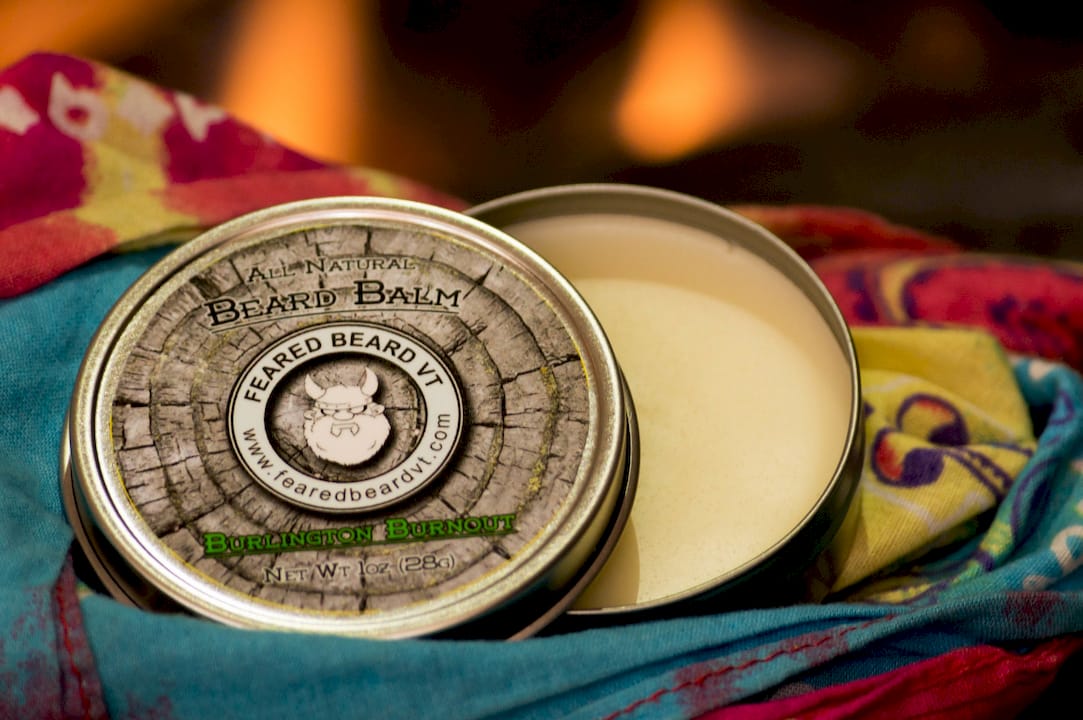
That wax layer also acts like a light windbreaker for your face. It doesn't seal hair completely, but it slows moisture loss and blunts the sting of cold, dry air better than oil alone.
Applying balm takes a bit more effort than butter. You have to warm a small scoop between your fingers until it turns from solid to slightly glossy, then work it through from skin to tip.
What balm does well:
- Tames flyaways and static, especially on medium to long beards
- Gives light to medium hold for shaping mustache edges or taming a wild neckline
- Adds a thin protective barrier against wind and cold
Pro Tip: If your balm feels waxy or hard to spread, warm it longer between your palms before it touches your beard. Rushing this step is the number one reason guys think balm feels "sticky."
Beard Butter vs Balm: What Butter Brings to the Table
Beard butter skips the wax almost entirely and leans on butters like shea, cocoa, or mango, mixed with carrier oils. Because there's no wax to melt down, butter is generally wax-free and starts absorbing the moment it hits your skin, which is why it feels lighter and less structured in your hand than balm.
That lack of wax is the entire point. Butter's job is conditioning the hair shaft itself. It smooths the outer cuticle layer of each strand, which cuts down on frizz and leaves hair feeling noticeably softer within a few uses. It won't hold a style, but it will make your beard easier to comb and less likely to catch on a sweater.
Butter typically melts faster than balm and sinks in quicker, so there's less residue left on your fingers or your pillow.
Where butter shines:
- Nightly conditioning routines, since there's no hold to worry about disturbing while you sleep
- Short to medium beards that don't need shaping, just softness
- Guys with sensitive skin who want fewer waxy or occlusive ingredients
Beard Butter vs Oil vs Balm: A Side-by-Side Look
Marketing labels blur these three products constantly, so here's how they actually stack up when you check the label and the feel in your hand.
| Dimension | Beard Balm | Beard Butter |
|---|---|---|
| Primary purpose | Styling + light conditioning | Deep conditioning |
| Texture & feel | Semi-solid, needs warming | Soft, melts on contact |
| Hold level | Light to medium | Minimal to none |
| Best beard length | Medium to long | Short to medium, any length for softness |
| Skin sensitivity | Fine for most, check wax source | Generally gentler, fewer occlusives |
| Time of day | Daytime, when you need shape | Evening or as-needed conditioning |
The fastest way to tell them apart on a shelf, according to FATCO's breakdown of beard butter, is to scan the ingredient list for the word "wax." If it's there, you're holding a balm no matter what the label calls itself.
How to Choose Between Beard Balm and Butter
Start with the problem, not the product. Skin issues (itch, flaking, tightness) point you toward butter or oil. Hair issues (frizz, flyaways, no shape) point you toward balm.
- Identify your main complaint. Dry, itchy skin under the beard means you need conditioning first. A beard that won't lie flat or hold a line means you need hold.
- Assess your beard length. Short beards and stubble usually do better with butter or oil since there's not enough hair to style anyway. Medium to long beards benefit from balm's structure.
- Factor in climate. Cold, dry winters call for balm's protective film. Humid summers often call for lighter butter so you're not adding extra product to hair that's already damp.
- Match to your finish preference. Want a groomed, shaped look for work? Balm. Want soft, natural movement? Butter.
Quick checklists:
- Stubble or short beard: oil for skin, light butter if it feels rough, skip balm entirely
- Medium beard: butter at night, balm on days you need shape
- Long beard: oil in the morning, balm for daytime control, butter before bed
Pro Tip: New to any of these? Patch-test on your forearm for 24 hours before applying to your face, especially if you have sensitive skin or a history of reacting to fragrance. Persistent itching or flaking that doesn't improve with conditioning is worth mentioning to a dermatologist, since no beard product treats an underlying skin condition.
How to Layer Beard Oil, Butter, and Balm the Right Way
Most guys overcomplicate this. The order matters more than the amount.
Morning routine:
- After showering, while your beard is still slightly damp, apply a few drops of oil directly to the skin underneath.
- Comb through to distribute the oil from root to tip.
- If you need shape for the day, warm a pea-sized amount of balm and work it in last.
Night routine:
- If your skin feels tight or dry, apply oil to the skin first.
- Follow with a fingertip scoop of butter through the length of your beard, focusing on the ends where hair is oldest and driest.
- Comb once more to spread it evenly and avoid a greasy patch near your chin.
A few notes on amounts: start smaller than you think you need. A pea-sized amount of balm and a fingertip scoop of butter cover most beards under six inches. You can always add more, but you can't easily take away a beard soaked in product. Comb or brush after every application. Fingers alone tend to clump product near the jawline and leave the ends dry.
Ingredients Worth Checking on the Label
Reading a beard product label takes about ten seconds once you know what each category does.
- Butters (shea, cocoa, mango): the conditioning backbone, softening hair and skin
- Carrier oils (jojoba, argan, sweet almond): lightweight oils that carry other ingredients and absorb without heaviness
- Waxes (beeswax or candelilla): the ingredient that separates balm from butter and creates hold
- Essential oils: mostly scent, though some carry mild secondary benefits
If you have sensitive skin, favor fragrance-free formulas and non-comedogenic carrier oils, and always patch-test first. Vegan alternatives exist too: candelilla wax swaps in for beeswax in plant-based balms, though it has a different melting point and can feel slightly firmer at first application.
Red flags worth skipping: mineral oil as a filler, "fragrance" listed as one of the first three ingredients, or a preservative list so long you can't pronounce half of it. Feared Beard VT's ingredient page breaks down exactly what goes into each formula and why.
How Feared Beard VT Maps to These Routines
Every formula Feared Beard VT makes is small-batch and built from ingredients you can actually pronounce. That matters here because the balm versus butter decision comes down to what's in the jar, not just what the label promises.
For daytime shaping and flyaway control, the natural beard balm combines butters and wax the way this guide describes. For evening conditioning, pairing an oil with a richer balm like Frosted Woods covers both the skin and hair shaft in one short routine. Feared Beard VT customers consistently point to softer, better-smelling beards as the payoff of sticking with a routine instead of switching products every few weeks.
Can Beard Balm or Butter Cause Skin Reactions?
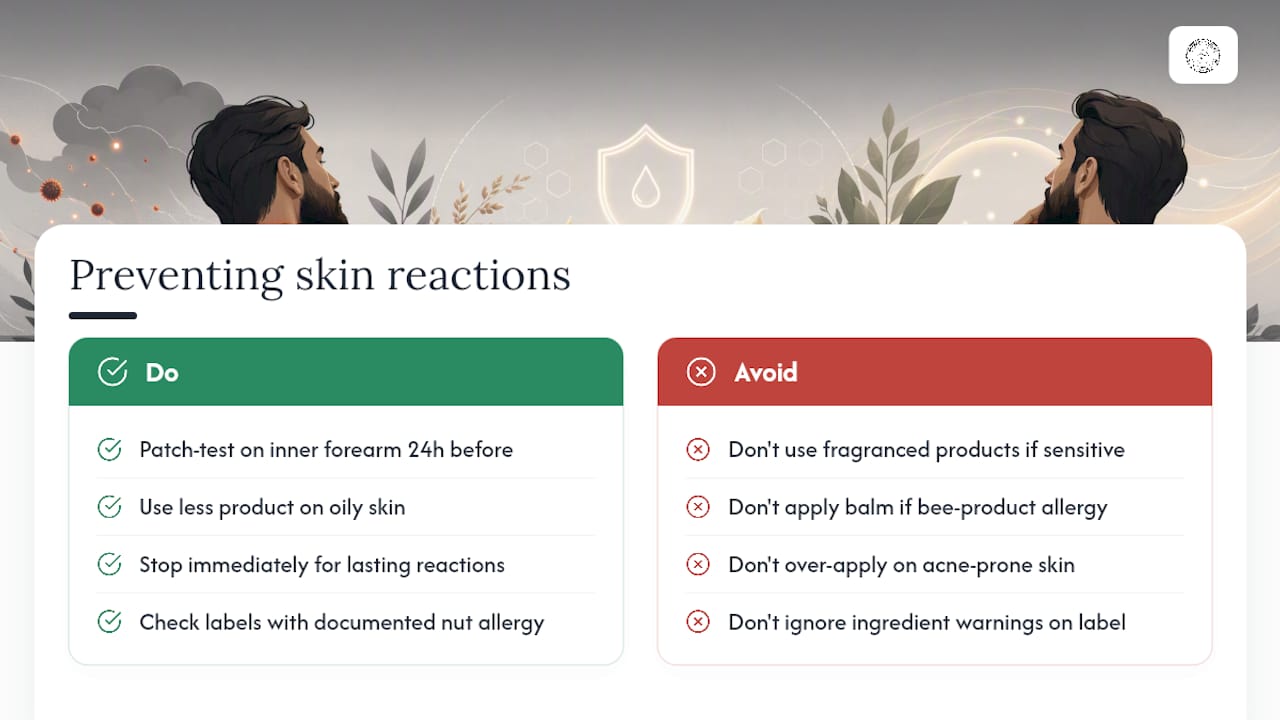
Reactions to beard products almost always trace back to one ingredient category: fragrance. Essential oils and synthetic scents are the most common trigger for redness, itching, or small bumps along the jawline, especially on skin that's already irritated from shaving.
Beeswax itself rarely causes problems, but people with a known bee product allergy should avoid balm entirely and choose a plant-wax or wax-free butter instead. Nut-derived butters like shea are technically tree nut derivatives, though refined shea butter is low-risk for most people with nut allergies. If you have a documented nut allergy, check the label before assuming that's safe for you specifically.
The most common complaint isn't an allergy at all. It's over-application. Using too much balm or butter on already-oily skin can clog pores and lead to breakouts along the cheeks and neck, particularly for guys with acne-prone skin. The fix isn't switching products, it's using less.
Any redness, swelling, or itching that shows up within minutes of applying a new product and doesn't fade within a day is worth stopping immediately. Patch-testing on your inner forearm 24 hours before your first face application catches the vast majority of these issues before they ever reach your beard.
Storage and Shelf Life: How Long Do Balm and Butter Last?
Beard balm tends to outlast butter on the shelf because wax acts as a natural stabilizer, slowing oxidation in the oils around it. A well-formulated balm, kept in a cool, dry spot away from direct sunlight, typically holds its quality for close to a year after opening.
Butter, with its higher ratio of soft butters and lower or absent wax content, is a bit more sensitive to heat and light. Left in a hot car or on a sunny windowsill, both products can soften, separate, or develop a slightly rancid smell well before their expected shelf life runs out. That's your cue to toss it, not stir it back together.
A few habits extend the life of either product: keep the lid tightly closed between uses, scoop with clean, dry fingers instead of introducing water into the tin, and store both in a bathroom cabinet or drawer rather than on an open shelf near a window. If you notice a change in color, a sour or off smell, or visible separation, that's the product telling you it's past its useful window, regardless of what the label's original shelf-life estimate said.
What Should Balm or Butter Cost You?
Beard balm and beard butter generally sit in a similar price range at the small-batch, all-natural end of the market, since both rely on comparable base ingredients like shea butter and carrier oils. The real cost driver isn't balm versus butter, it's ingredient quality. A tin loaded with organic, cold-pressed oils and real essential oils costs more to produce than one built on mineral oil and synthetic fragrance, and that difference usually shows up in how the product performs, not just the price tag.
Value comes down to how long a tin lasts you and how well it solves your actual problem. A one-ounce tin of balm used in pea-sized amounts a few times a week can last a couple of months. Butter tends to get used a bit more liberally since there's no hold to worry about disturbing, so it may run out slightly faster per ounce.
The cheapest option on a shelf isn't always the best value if it means reapplying constantly, dealing with a scent that fades in an hour, or switching products because the first one irritated your skin. Paying a bit more for a formula that actually matches your beard length and skin type usually costs less over a year than cycling through drugstore products that don't work.
When You Actually Need Both, and When One Is Enough
Layering balm and butter makes sense in one specific case: a longer beard in a dry climate that also needs styling control. Outside that combination, most guys are better off picking one product based on their dominant problem and sticking with it.
A minimal routine for short beards is oil alone. Medium beards do fine with butter at night and balm only on days that call for shape. Long beards benefit most from the full rotation described earlier in this guide.
The most common mistake isn't picking the wrong product, it's over-applying the right one. Heavy butter on oily or acne-prone skin causes more breakouts than any single ingredient does, and no amount of balm fixes a beard that just needs a trim.
— Kyle
Ready to Build Your Routine?
Feared Beard VT makes this decision simple: small-batch, 100% natural balms and oils formulated for exactly the routines covered in this guide, with no filler ingredients padding out the tin. If flyaways and shape are your problem, the beard balms collection covers everything from everyday hold to richer, butter-forward blends like Frosted Woods. If skin dryness is the real issue, start with the beard oils collection for your morning routine.

Every batch is hand-poured with ingredients chosen for effectiveness first, not shelf appeal. Not sure which product fits your beard length and skin type? Browse the full Feared Beard VT lineup and pick your starting point based on the checklist above, or grab a starter set if you want to try both hold and conditioning before committing to one.
Sources
- Beard Balm Vs Beard Butter: What Is The Difference?
- Beard Butter vs Balm: Picking the Right Texture | FATCO
- Beard Oil vs Beard Butter: What You Actually Need | GQ Middle East
FAQ
Do You Really Need Beard Balm?
Not always. If your beard doesn't need shaping and your only issue is dryness or itch, butter or oil alone can handle it without the added hold balm provides.
Is It Better to Use Beard Balm or Oil at Night?
Oil is the more common nighttime pick since it hydrates skin without leaving a waxy residue on your pillow; balm's hold works better saved for daytime styling.
Do You Apply Beard Balm Wet or Dry?
Balm works on both, but most guys get better distribution applying it to a slightly damp beard right after a shower, then combing it through as it dries.
When Should I Use Beard Butter?
Beard butter works best in the evening as a conditioning step, or anytime your beard feels rough and needs softness without any added hold or shine.