
Stubble and short beards respond best to a boar bristle brush; medium, long, and curly beards need a comb for detangling and shaping. Most men end up using both: a comb to work out knots and set the line, a brush to spread oil evenly and knock down flyaways. Apply oil first, then comb through tangles or brush a short beard smooth, and let the beard's length dictate which tool leads.
TL;DR:
- A boar bristle brush is best suited for short and medium beards to distribute oils, exfoliate the skin, and train hair; longer beards require a comb for detangling and shaping.
- Using a combination of tools—oil followed by a brush for styling or a comb for detangling—achieves the best grooming results, especially when matching tool firmness to beard texture.
- Daily routines should involve applying oil or balm, then using a comb to detangle, with brushing reserved for short beards or finishing touches, and weekly cleaning ensures longevity.
- Wide-tooth wooden combs are preferred for wet or curly beards to prevent snagging and damage, while a brush is mainly for short, straight, or medium beards.
- For thick, wiry, or curly beards, a mixed bristle brush and a wide-tooth comb provide effective oil distribution and detangling without causing damage.
Table of Contents
- Beard Brush vs Comb: When a Brush Wins
- Beard Brush vs Comb: When a Comb Takes Over
- Which Tool Fits Your Beard Length and Texture
- Daily and Weekly Beard Maintenance Routines
- What to Look for When Buying a Brush or Comb
- How Feared Beard VT Fits Your Brush and Comb Routine
- What Realistic Grooming Actually Looks Like
- Build Your Routine With Feared Beard VT
- Sources
- FAQ
Beard Brush vs Comb: When a Brush Wins
A brush does two jobs a comb can't: it distributes oil across every strand instead of just pulling it through a section, and it lightly exfoliates the skin underneath. That second point matters more than most guys realize. Beard brushing provides gentle exfoliation of the skin beneath facial hair, which helps clear flakes and redistribute natural oils so the skin under a beard stays in better condition, according to grooming health notes from University of Utah Health. That's the mechanism behind fewer beardruff flare ups and less itch during the awkward growing-in phase.
Brushes shine most on short-to-medium beards, where bristles can reach the skin and train hair to lie in one direction. On longer beards, a brush mostly grooms the surface and misses the tangles underneath, which is where a comb takes over.
Bristle material changes what the brush actually does:
- Boar bristle has a scaled surface that grips oil and smooths the hair cuticle, giving a shinier finish and less static than smooth synthetic pins, per Mackay Hair Tools' bristle guide.
- Mixed bristle (boar plus longer nylon pins) reaches deeper into thicker, coarser beards where pure boar can't penetrate past the surface layer.
- Synthetic bristle costs less and works fine for basic surface styling, though it won't distribute oil as effectively as boar.
Brush a dry beard when the goal is styling and taming flyaways. Brush right after applying oil when the goal is distribution. One caution: don't run a boar bristle brush through a soaking wet beard. Wet bristles lose their grip on the hair and the natural boar fibers can degrade faster with repeated wet use.
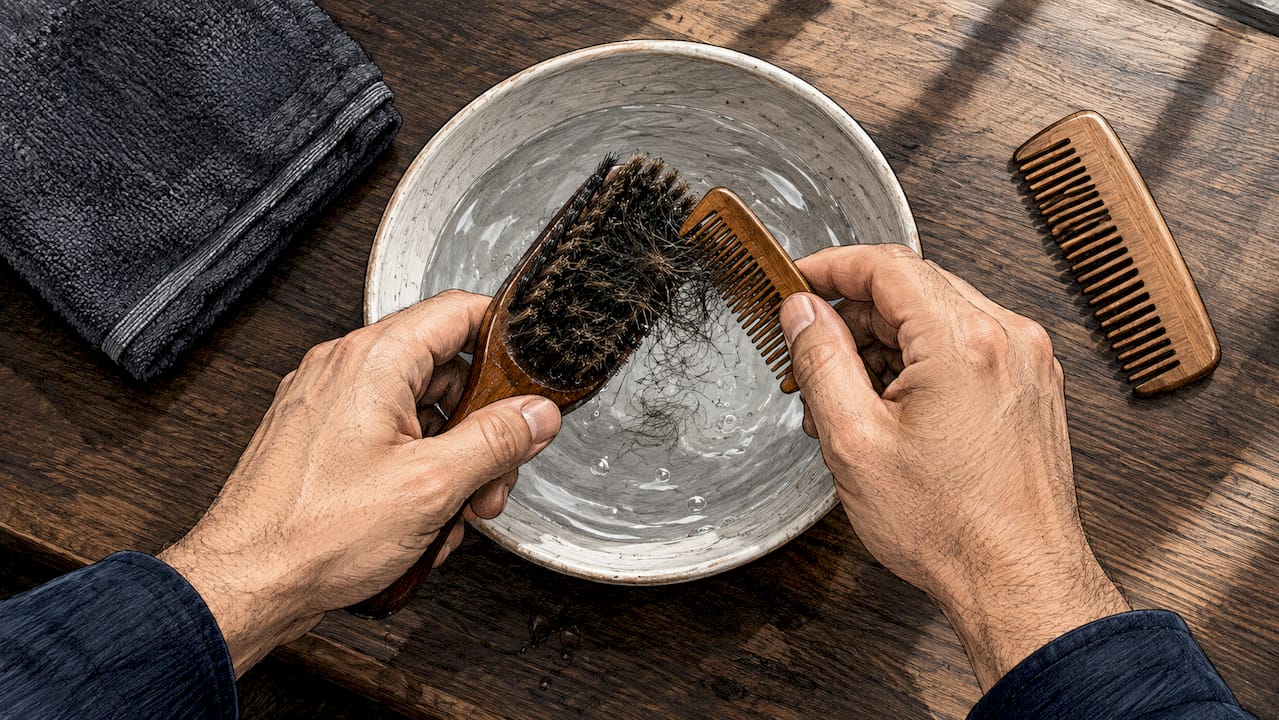
Clean a brush weekly by removing trapped hair with a comb, then swirling the bristles in lukewarm water with a drop of mild shampoo, rinsing, and letting it air dry bristle side down.
Pro Tip: Match bristle firmness to your beard's coarseness, not your preference. Fine or thin beards do better with soft or medium bristles; thick, wiry beards need firm or mixed bristles or the brush just glides over the surface without doing anything.
Beard Brush vs Comb: When a Comb Takes Over
A comb solves what a brush can't: real detangling and precise shaping. Wide-tooth combs work through wet or knotted hair without pulling, while fine-tooth combs handle styling and prep the beard's edge before a trim. Grooming guides consistently recommend wide-tooth combs for wet or tangled beards and warn against fine-tooth combs on wet hair, since thinner teeth can snap strands that are still swollen with water, according to BeardResource's combing guide.
Material matters more with combs than most men expect. Wooden combs with seamless teeth reduce friction and static and are far less likely to snag than cheap injection-molded plastic combs, whose seams catch individual hairs and cause micro-breakage over months of daily use.
A basic combing sequence, based on standard grooming technique:
- Apply oil or balm first if you're combing for styling rather than just detangling.
- Start underneath the chin and comb upward. This lifts the beard and creates fullness instead of flattening it.
- Comb the cheeks and chin downward to set the direction hair will fall naturally.
- Comb the mustache outward toward the corners of the mouth, separate from the rest of the beard.
- Switch to a fine-tooth comb only once the beard is dry, for final shaping or trim prep.
Clean a comb by pulling trapped hair out by hand after each use and wiping down the teeth. Wooden combs shouldn't be soaked, since water swells the wood and can warp the teeth over time. And skip sharing combs. Beyond basic hygiene, a comb picks up oils and product residue that don't belong in someone else's beard.
Which Tool Fits Your Beard Length and Texture
The right call changes as a beard grows and as texture enters the picture. Here's how to think about it by stage:
- Stubble (under half an inch): Brush only. There's not enough length to tangle, and a soft brush handles skin exfoliation and grooming.
- Short (half inch to two inches): Brush leads for training hair to lie flat; a comb helps only if wiry hairs start crossing each other.
- Medium (two to four inches): Both tools earn a spot. Comb first to detangle, brush second to finish and distribute oil.
- Long (four inches plus): Comb becomes the primary tool for daily detangling and shape. Save the brush for a quick finishing pass after styling.
Density and curl pattern shift these defaults. Thick or curly beards do better with a wide-tooth comb as the daily driver, since stiff boar bristles can disrupt curl pattern and cause breakage on tightly coiled hair, a caution echoed in Davines' guidance on boar bristle use. Coily textures often skip the boar-bristle finishing pass entirely and rely on a comb plus a leave-in balm for hold.
A practical sequence for most beards: apply oil or balm, comb through to detangle, then brush to finish and set direction. Watch for red flags that mean stop and switch tools: if you feel snagging, hear hair snapping, or notice the beard looking thinner at the jawline, ease off and swap the fine-tooth comb for a wide-tooth one, or the brush for a lighter hand.
Daily and Weekly Beard Maintenance Routines
A quick morning routine takes under two minutes: a few drops of beard oil worked in with fingertips, then a comb pass to detangle and set the line, finished with a brush if the beard is short enough to benefit. An evening routine can go deeper: balm for extra hold on longer beards, full combing from underneath the chin, then a brush pass to smooth flyaways before bed.
Weekly maintenance keeps both tools working properly:
- Rinse boar bristle brushes in lukewarm water with a drop of mild shampoo, then air dry bristles down so water doesn't pool at the base.
- Wipe wooden or metal combs dry after any water contact. Never submerge a wooden comb.
- Check bristles and teeth for buildup of dried oil or balm, which attracts dust and can dull the beard's shine over time.
- Store both tools somewhere dry, not in a steamy bathroom cabinet, to avoid mold on natural bristle and warping on wood.
Replace a brush once bristles start splaying permanently or shedding, and replace a comb once teeth chip or the seam starts catching hair.
Pro Tip: Dry your brush bristle side down on a towel, not bristle side up in a cup. Water trapped at the base is what causes mold and a musty smell in natural bristle brushes.
What to Look for When Buying a Brush or Comb
Bristle grade should match texture, not marketing copy. Soft bristles suit fine or thin beards, medium bristles suit average density, and firm or mixed bristles suit thick, wiry hair that a soft brush can't move.
- Boar bristle: best shine and oil distribution, but weaker on very thick or curly beards without a mixed-bristle design.
- Mixed boar and nylon: the better all-around choice for coarse or dense beards needing both grip and penetration.
- Synthetic: budget-friendly and fine for basic surface grooming, though it won't smooth cuticles the way natural bristle does.
- Wooden or metal seamless combs: minimize snagging and static compared with molded plastic.
Watch for red flags on pricing. Real boar bristle costs more to source than synthetic fill, and suspiciously cheap claims often mean a partial-fill product.
Boar bristles carry a naturally scaled surface texture that engages the hair cuticle more effectively than smooth synthetic pins, which is part of why they reduce static and help oil travel evenly down each strand, based on microscopy research on bristle surface structure. That texture is also why boar bristle needs gentler handling on wet or curly hair. The same grip that spreads oil so well can catch and stress hair that's already swollen with water or naturally prone to coiling.
How Feared Beard VT Fits Your Brush and Comb Routine
Oil or balm applied before combing or brushing is what actually makes either tool work well. A few drops of oil worked through a damp (not soaking) beard, followed by a wide-tooth comb, spreads product evenly instead of leaving it pooled near the skin. Pairing a quality oil with a brush finish helps sebum and product move down each strand for a smoother, less static-prone look. Feared Beard VT builds its beard oils around this exact pairing: small-batch, all-natural formulas meant to work with a brush or comb, not against one.
What Realistic Grooming Actually Looks Like
Good tools change how a beard looks and feels, not how fast it grows. There's no evidence brushing or combing speeds growth. The real payoff is mechanical: better product distribution, fewer tangles, calmer skin. Expect visible improvement in texture and manageability within two to three weeks of consistent care, not overnight. See a barber when the shape itself is wrong or tangling has gotten out of hand. Save daily brushing and combing for maintaining what's already working.
— Kyle
Build Your Routine With Feared Beard VT
Some companies offer small-batch oils and balms made with all-natural ingredients, not the synthetic fillers common in mass-market grooming lines. If your beard is short and needs light hold with shine, a beard oil applied before brushing does the job. If it's longer and needs more structure to hold a shape through the day, a beard balm gives more hold and hydration for combing into place.

Pick oil when the priority is softness, shine, and easy absorption. Pick balm when you need more hold for styling a longer beard. Feared Beard VT also carries a metal beard comb built to pair with its oils, so detangling and product distribution use the same routine instead of guesswork. Start with the beard oil collection and pick the scent or unscented option that fits your skin.
Sources
- Boar bristle brush — complete guide (Mackay Hair Tools)
- How to comb a beard FAQ (BeardResource)
- Beard health notes — University of Utah Health
- Digitalcommons
FAQ
What Is the Three-Month Rule for Beards?
It refers to letting a beard grow untouched for about three months before shaping or trimming, since early growth is often patchy and uneven until follicles catch up across the face.
Do Beard Brushes Actually Work?
Yes. Brushes distribute oil evenly, smooth the hair cuticle for shine, and gently exfoliate the skin underneath, which helps reduce flakes and itch.
When Should I Start Using a Beard Brush?
Start once there's enough length for bristles to grip, typically around the two-to-three-week mark, using a soft or medium brush on shorter growth.
Should Textured or Coily Beards Be Brushed or Combed?
A wide-tooth wooden comb is generally the safer daily tool for coily or very curly beards, since stiff boar bristle brushing can disrupt curl pattern and cause breakage; a brush works better as an occasional finishing pass rather than the primary tool.