
Yes. Beard oil belongs on your facial skin, not just your hair, and for most men it's genuinely good for both when you pick a non-comedogenic carrier oil and apply it correctly. The two things that determine whether you get healthy skin or a breakout are ingredient selection and technique: skip heavy, pore-clogging carriers, and always work the oil into the skin first before it ever touches the hair.
TL;DR:
- Non-comedogenic carrier oils like jojoba, argan, and grapeseed are safest for skin, while coconut oil and certain butters can clog pores and cause breakouts.
- Applying beard oil immediately after a shower and massaging it into damp skin for 30 seconds ensures effective absorption and skin benefits.
- Over-application, fragrance sensitivity, and heavy oils are common causes of irritation and breakouts, which can often be remedied by switching ingredients or reducing dosage.
- Patch-testing new beard oils on the forearm for 24 to 72 hours helps identify potential allergies or reactions before applying to the face.
- Consistent skin-first application of oil, combined with proper technique and ingredient literacy, is key to avoiding irritation and achieving optimal skin and beard health.
Table of Contents
- Is Beard Oil Good for Skin Care, Not Just Hair Care?
- Which Ingredients Are Safe for Skin, and Which Cause Breakouts?
- How to Apply Beard Oil to Skin Without Overdoing It
- Why Do I Have Breakouts or Irritation After Using Beard Oil?
- How Feared Beard VT's Formulations Line Up With This Advice
- What This Guide Gets Right That Most Advice Misses
- Where to Start if You Want Skin Benefits Without the Guesswork
- Sources
- FAQ
Is Beard Oil Good for Skin Care, Not Just Hair Care?
Beard oil's real job isn't shine or scent. It's moisturizing the skin underneath your beard, and that's where most of the itch, flaking, and irritation you blame on your beard actually starts.
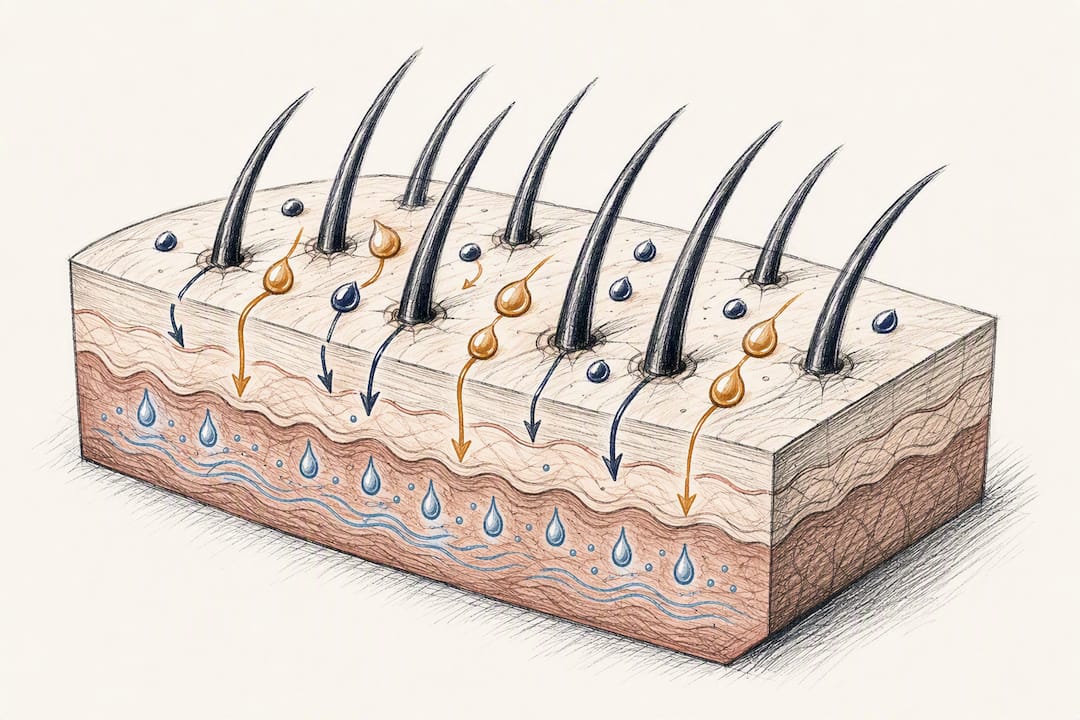
Beard itch is usually a dry-skin problem, not a hair problem. Healthline notes that treating the skin directly resolves itch far more reliably than trying to soften the hair alone. That matters because facial hair traps heat and blocks airflow, which dries out the skin underneath faster than exposed skin on the rest of your face. A water-based lotion struggles to get through dense hair to reach that skin. Oil-based moisturizers do a better job holding onto moisture in an environment where lotions often can't penetrate, which is part of why oil, not cream, became the standard fix.
Used consistently, beard oil on skin delivers:
- Relief from dryness, flaking, and "beardruff" at the follicle level
- Less itching, especially in the first few weeks of growing out a beard
- Softer, less brittle hair that resists breakage
- A fuller, better-groomed appearance as flyaway hairs lie down
Consistent users typically notice softer skin and less flaking within days to a couple of weeks, according to Healthline's review of beard oil's effects. The hair benefits are secondary. The skin is the priority.
Which Ingredients Are Safe for Skin, and Which Cause Breakouts?
Non-comedogenic carriers are the baseline for anything applied directly to facial skin:
- Jojoba oil closely mimics human sebum, so skin absorbs it without overloading pores.
- Argan oil is rich in vitamin E and fatty acids without a heavy, occlusive texture.
- Grapeseed oil is light, fast-absorbing, and rarely triggers breakouts even on oily skin.
On the other end, some common oils cause more problems than they solve. Coconut oil and coconut butter are the most frequent offenders. Healthline points out that poorly formulated oils built around comedogenic ingredients like coconut butter can clog pores and trigger breakouts, even though coconut oil is often marketed as a beard staple. Heavy butters and certain synthetic fragrances carry the same risk.
Essential oils add another layer of caution. Citrus oils in particular can increase photosensitivity, meaning sun exposure after application can cause a rash or burn that has nothing to do with the sun itself. The American College of Healthcare Sciences confirms this phototoxic reaction is a real risk with citrus-derived essential oils.
Pro Tip: Before committing to a new beard oil, patch-test it on your inner forearm or behind your ear for 24 to 72 hours. This simple patch-test method catches allergic or irritating ingredients before they ever reach your face.
How to Apply Beard Oil to Skin Without Overdoing It
Getting beard oil onto your skin, not just coating the surface of your hair, comes down to timing and technique, not the product itself.
- Apply right after a shower, while your beard is still damp. Open pores and slightly hydrated skin absorb oil faster and more evenly, ideally within five minutes of stepping out.
- Warm the oil in your palms by rubbing your hands together for a few seconds.
- Massage into the skin first, using your fingertips to press the oil against your jawline, cheeks, and neck for about 30 seconds, covering every beard-bearing area before it touches the hair strands themselves.
- Work outward through the hair, distributing whatever's left on your palms from root to tip.
- Comb or brush through to spread the oil evenly and train the hair into shape.
This skin-first method is the technique most grooming professionals recommend, and it's the difference between oil that actually treats your skin and oil that just sits on top of your hair looking shiny.
How much you use depends entirely on beard length:
Use somewhat more oil if you have tightly coiled or very coarse hair, since it absorbs oil more slowly than straight or wavy hair. Once daily use is standard for most men. If you live somewhere cold and dry, or your beard runs on the thicker side, twice daily (morning and after showering) can help without tipping into greasy territory.
Why Do I Have Breakouts or Irritation After Using Beard Oil?
Not every reaction under a beard is the same problem, and figuring out which one you're dealing with changes the fix.
Acne shows up as small, tender bumps concentrated where the oil sits heaviest, typically the jawline and chin. Contact dermatitis looks more like redness, dryness, or a burning sensation spread across the skin, often tied to a fragrance or essential oil. Folliculitis presents as small red or white bumps centered directly on hair follicles, sometimes with mild pus, and tends to follow over-application or a dirty applicator.
Dermatology guidance from Leslie Baumann MD points to comedogenic carrier oils, over-application, or fragrance sensitivity as the three most common causes of post beard oil breakouts. The fixes follow directly from the cause:
- Switch from coconut oil or heavy butters to jojoba or argan
- Cut your dose in half for a week and see if skin clears
- Move to an unscented or lightly scented formula if fragrance is the likely trigger
- Wash your beard with a gentle cleanser before applying oil, rather than layering oil onto old product
If a rash appears specifically after sun exposure, stop using any citrus-based oil immediately and stay out of direct sun until it clears. If irritation, swelling, or bumps persist for more than a week after you've made these adjustments, see a dermatologist rather than cycling through more products on your own.
How Feared Beard VT's Formulations Line Up With This Advice
The brand builds every product around the principle this guide leans on: skin safety starts with the carrier oil, not the marketing claims on the bottle. Feared Beard is dedicated to crafting 100% natural, small-batch beard oils designed for healthier, better-nourished beards, using ingredients chosen for how they behave on skin, not just how they smell.
The natural beard oil formulation is built to hydrate and style without relying on heavy, pore-clogging bases, which addresses the exact problem dry, unruly facial hair creates for men who've never found a product that actually reaches the skin underneath. Batches are formulated and packed by hand, and ingredient lists are posted directly on product pages so buyers can check for anything their skin has reacted to before committing to a full bottle.
What This Guide Gets Right That Most Advice Misses
Most beard oil content treats the product like a styling accessory. That's backwards. The skin underneath your beard is living tissue that gets less airflow and less light than the rest of your face, and it behaves accordingly: drier, itchier, more reactive to whatever you put on it.
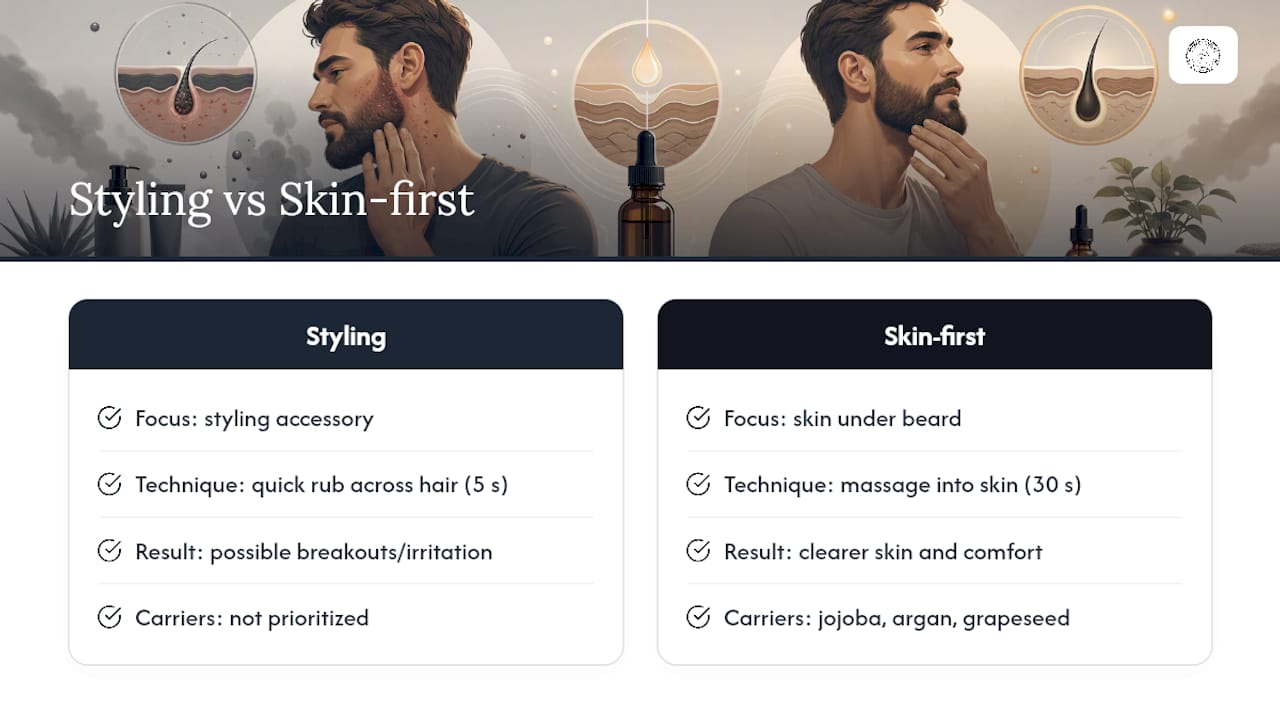
The conventional advice to "just add a few drops and rub it in" undersells how much technique matters. Two men can use the identical bottle and get opposite results, one clear-skinned and comfortable, one breaking out, simply because one massaged it into the skin for 30 seconds and the other rubbed it across the surface of the hair in five seconds flat. That's not a product failure. That's a technique failure.
If I had to pick one priority for a first-time user, it's ingredient literacy over brand loyalty. Learn to read a label for jojoba, argan, or grapeseed as the carrier, and treat coconut oil and synthetic fragrance as yellow flags worth investigating, not automatic deal breakers. Everything else, the drop count, the timing, the massage technique, is easy to fix once the base ingredient is right.
— Kyle
Where to Start if You Want Skin Benefits Without the Guesswork
If you're switching to a new oil after reading this, start with a formulation built on the same non-comedogenic baseline covered above. Feared Beard VT's natural beard oil uses carrier oils selected for how they sit on skin, not just how they condition hair, which is the entire foundation this guide is built around.
For anyone with sensitive or acne-prone skin, start with an unscented or lightly scented option and patch-test it on your forearm for a day or two before applying it to your face. That single step catches most fragrance or carrier sensitivities before they ever reach your jawline. Once you've confirmed it agrees with your skin, the full beard oil lineup and matching beard balms give you options to build a complete routine around whatever carrier your skin tolerates best. Check the ingredient list on any product page before you buy, and place your order once you know exactly what you're putting on your face.
Sources
- Does beard oil work? — Healthline
- How to Apply Beard Oil the Right Way (Perfect Guide) — CulturedGrooming
- What is photosensitivity with essential oils? — American College of Healthcare Sciences (ACHS) blog
- Is your beard oil causing breakouts? — Leslie Baumann MD
FAQ
Does Beard Oil Moisturize the Skin Underneath the Beard?
Yes. Beard oil's primary function is moisturizing the skin beneath the hair, which helps prevent dry skin, beardruff, and itching more reliably than treating the hair alone.
How Long Should I Leave Beard Oil on My Face?
Beard oil isn't meant to be rinsed off. Massage it into the skin for about 30 seconds, distribute it through the hair, and leave it in as part of your daily routine.
Does Beard Oil Clog Your Pores?
It can, but only with the wrong formulation. Comedogenic carriers like coconut oil or heavy butters are the usual cause, while non-comedogenic options like jojoba or argan carry much lower risk.
What Is the 3-Month Beard Rule?
It refers to giving a beard roughly three months of consistent growth and care before judging its shape, thickness, or how well a routine like beard oil is working, since early patchiness and irritation often resolve as the beard matures.
How Often Should I Use Beard Oil?
Once daily, usually right after a shower, works for most men. Twice daily can help in cold, dry climates or with very thick beards, as long as you're not seeing greasiness or breakouts.