
Most beard oils fall into four bands: under $10 (budget), $10 to $20 (value), $20 to $50 (premium), and $50-plus (luxury). The $20 to $50 range is the sweet spot for most buyers, since it's where you'll find real carrier-oil blends, honest ingredient lists, and small-batch formulation without paying for a fancy label. If you want 100% natural, small-batch oil in that range, Feared Beard VT is a direct option worth putting on your list.
TL;DR:
- The most popular price range for beard oils is $20 to $50, offering a good balance of quality ingredients and small-batch craftsmanship.
- A one-ounce bottle typically lasts 30 to 60 days with daily use, making long-term cost efficiency depend heavily on application habits.
- Ingredient quality and small-batch production are the main factors driving higher prices, not just packaging or brand prestige.
- When comparing prices, always check the price per ounce to identify true value, as larger bottles often offer better long-term savings.
- Check for transparent ingredient lists, especially named essential oils, and avoid products with vague labels like "fragrance" to ensure skin safety and product quality.
Table of Contents
- Beard Oil Price Tiers Explained: What You Get At Each Band
- What Really Drives Beard Oil Price
- How to Choose By Budget: Practical Criteria and Red Flags
- Cost Examples and Quick Math
- Why Feared Beard VT Prices What It Does
- Average Beard Oil Price Range Across the Market
- Where To Buy Beard Oil at the Best Prices
- How To Spot Real Discounts and Bulk Savings
- Hidden Costs That Change Your Final Price
- How Long a Bottle Lasts and What That Means for Cost Over Time
- Shop Feared Beard VT: Where to Start Based on Your Budget
- Balancing Cost and Long-Term Beard Care
- Sources
- FAQ
Beard Oil Price Tiers Explained: What You Get At Each Band
Price tells you more about a beard oil than the label copy does, once you know what to look for. Bottle size matters as much as the sticker price. A lot of "budget" oils look cheap until you calculate the price per ounce, and a lot of "premium" oils justify their cost with ingredients you can actually pronounce.
Here's how the four bands typically break down:
- Under $10: Usually 1 to 2 ounce bottles, mineral oil or cheap synthetic carrier bases, minimal scent complexity, often sold in drugstore multi-packs.
- $10 to $20: 1 ounce bottles are standard here, with basic natural carriers like grapeseed or sunflower oil and simple single-note scents.
- $20 to $50: This is where jojoba, argan, and essential oil blends show up, along with actual ingredient transparency and small-batch production.
- $50-plus: Rare carrier oils, complex layered scents, luxury packaging, and sometimes limited-run or subscription-exclusive formulas.
Market data backs up why that middle band dominates shelf space. Research tracking 124 beard oil listings found the $20 to $50 band holds 41% of the market, making it the single most crowded price tier in the category.
Pro Tip: Always check ounces before you check dollars. A $12 bottle at 0.5 ounces costs more per ounce than a $22 bottle at 1 ounce, even though the sticker price looks cheaper.
Retail data supports the budget end too, with options like QAI Liquid Hair offering accessible, budget-friendly grooming products. King C. Gillette's beard oil with argan oil sells for $9.69 at a 1 ounce size, proving you don't need to spend $30 to get a recognizable, well-formulated carrier oil blend on a tight budget.
What Really Drives Beard Oil Price
Ingredients are the biggest lever. A carrier oil like fractionated coconut or grapeseed costs pennies per ounce wholesale, while cold-pressed argan or organic jojoba runs several times higher before you even factor in essential oils like sandalwood or cedarwood, which are priced by rarity and yield. That's before labor enters the picture.
Small-batch production is inherently more expensive than mass manufacturing. A factory blending thousands of gallons at once spreads its labor and equipment costs across huge volumes. A small-batch producer measuring, mixing, and bottling by hand doesn't get that advantage, so the labor cost per bottle stays high no matter how efficient the process is.
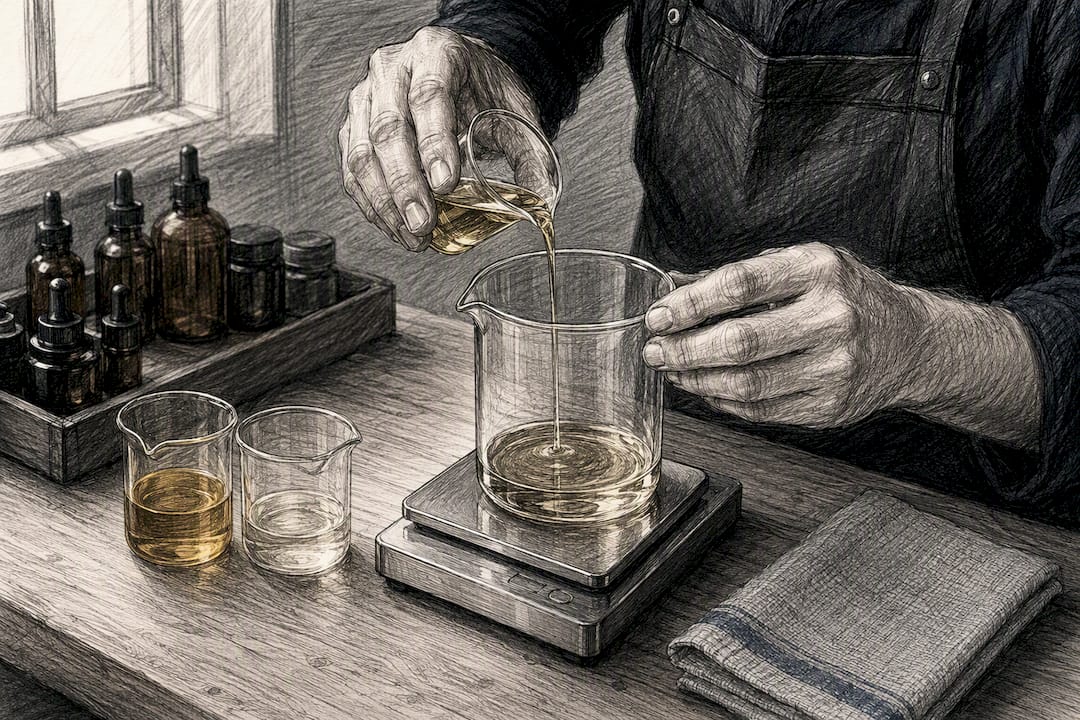
Market research on the beard oil category confirms this pattern directly: higher prices track with premium raw materials, small-batch methods, and quality-control costs, not just fancier packaging.
Packaging, branding, and retail margins stack on top of ingredient and labor costs. A glass dropper bottle with a printed label costs more to source than a plastic squeeze bottle, and every markup between manufacturer and shelf (wholesale, distributor, retailer) adds a percentage on top.
What you're also paying for, whether you realize it or not:
- Ingredient testing and batch consistency checks
- Sourcing verification for organic or cold-pressed claims
- Formulation R&D for scent and absorption balance
- Compliance costs tied to labeling accuracy
Pro Tip: A higher price doesn't always mean better oil. It means more of these cost factors are present. Read the ingredient list before assuming the $45 bottle beats the $18 one.
How to Choose By Budget: Practical Criteria and Red Flags
Your beard length and skin type should drive your budget more than brand reputation does. Short beards (under three months of growth) need less oil per application, so a smaller, cheaper bottle in the $10 to $20 range often makes sense while you're still figuring out which scents and textures you like. Long beards burn through oil faster and benefit more from concentrated carrier blends in the $20 to $50 tier, where absorption and conditioning matter more than volume. Sensitive skin should skip the budget tier entirely. Cheap synthetic fragrances and low-grade mineral oil are the most common causes of beard-related skin irritation, and spending $20 or more usually buys you natural carriers that are gentler on skin.
Run every bottle through this checklist before buying:
- Read the full ingredient list, not just the front label claims.
- Check for named essential oils (like cedarwood or sandalwood) instead of vague "fragrance" listings.
- Calculate price per ounce so you're comparing apples to apples across bottle sizes.
- Look for a returns policy or satisfaction guarantee, which signals the brand trusts its own product.
- Search for a dedicated ingredients page on the brand's site, since transparency usually correlates with quality.
Three red flags should make you close the tab immediately: an ingredient list that just says "fragrance" with nothing else specified, a brand that won't publish sourcing information anywhere, and no returns or guarantee policy of any kind.
Pro Tip: If a product page can't tell you what carrier oil it uses, assume it's the cheapest one available. Brands proud of their ingredients list them first, not last.
Cost Examples and Quick Math
Price-per-ounce math cuts through marketing noise faster than any review. Here's how common bottle sizes and price points shake out:
| Bottle Size | Price | Price Per Ounce |
|---|---|---|
| 0.5 oz | $9.69 | $20 to $50 range |
| 1 oz | $20 to $50 range | $20 to $50 range |
| 1 oz | $9.69 | $9.69 |
| 2 oz | $20 to $50 range | $10 to $20 range |
Notice that a bigger bottle at a higher sticker price can still be the better deal per ounce. That $38 two-ounce bottle beats the $12 half-ounce bottle by a wide margin, even though the smaller bottle looks more "affordable" at checkout.
If you're wondering whether making your own beard oil saves money, the math leans toward yes, at least eventually. One cost breakdown estimates a first DIY batch costs about $7.40 for a 1 ounce bottle, with each subsequent bottle dropping to roughly $5.40 once you've already bought the base oils in bulk. That's cheaper than almost anything on a store shelf, but it requires upfront investment in carrier and essential oils, plus the time to measure and mix batches yourself, and you lose the convenience and consistency a bottled product guarantees.
Why Feared Beard VT Prices What It Does
This brand sits in the small-batch, all-natural category, which explains why its products land in the mid-to-premium range rather than the bargain bin. Every batch is formulated and packed by hand using ingredients the brand documents openly on its ingredients page, so you're not guessing what "natural" actually means on the label.
That approach benefits a specific kind of buyer: someone who has tried a cheap oil without satisfactory results and wants a formula built around functional carrier oils rather than filler.
For most first-time buyers, a single natural beard oil bottle is the smart entry point. If you're buying for a partner or friend who's new to beard care, the starter kit bundles oil with a balm so they're covered for both hydration and styling without guessing what to pair together.
- 100% natural, small-batch formulation
- Published ingredient sourcing, not vague "fragrance" labels
- Product options sized for both first-time buyers and long-term routines
Average Beard Oil Price Range Across the Market
Beard oil prices span roughly $6 at the absolute floor (drugstore private-label bottles) up to $80 or more for limited-run, luxury-branded oils sold in small artisan batches. Most shoppers never touch either extreme. The bulk of purchasing activity happens between $10 and $50, with the heaviest concentration landing in that $20 to $50 sweet spot where 41% of tracked listings live.
What pushes a bottle toward the top of that range isn't usually a single ingredient. It's a combination: rarer essential oils, hand-poured small batches, glass packaging instead of plastic, and a brand willing to charge for quality control most shoppers never see. What pushes a bottle to the floor is the opposite: synthetic fragrance instead of essential oils, mineral oil as the primary carrier, and manufacturing at a scale that trades ingredient quality for volume discounts.
If you're shopping with a firm number in mind, plan around $20 to $35 for a standard 1 ounce bottle from a reputable small-batch or mid-tier brand. That range consistently buys real carrier oil blends without paying luxury-tier premiums for packaging or limited-edition scents you'll only use once. Going below $10 usually means accepting a synthetic-heavy formula, and going above $50 usually means paying for exclusivity rather than a meaningfully better beard.
Where To Buy Beard Oil at the Best Prices
Online retailers give you the widest price comparison and the easiest access to small-batch brands that never make it to a physical shelf. Buying direct from a brand's own site, like Feared Beard VT's shop, usually means fresher batches and access to bundle deals that big marketplaces don't always offer. Marketplaces are useful for quick price comparisons across dozens of brands at once, but listings change fast and reviews can be manipulated, so cross-check ingredient claims against the brand's own site before trusting a marketplace description.
Specialty grooming shops and barbershops carry a smaller, curated selection, usually skewing toward the $20 to $50 tier since they're stocking brands that emphasize quality over shelf price. You'll pay a bit more than online in some cases, but you get the advantage of smelling a scent before committing to a full bottle, which online shopping can't replicate.
Subscription services can lower your effective price per bottle if you already know which scent and formula you like, since recurring orders often come with a built-in discount over one-off purchases. They're a poor fit if you're still experimenting with different oils, though, since you'll be locked into a formula before you've compared alternatives. Drugstores and mass retailers round out the budget end, offering the most accessible under-$15 options for anyone who wants to try beard oil without much financial commitment, as shown by widely available options like the King C. Gillette formula sitting at $9.69.
How To Spot Real Discounts and Bulk Savings
Bundle pricing is usually where the real savings live, not sitewide sales. A brand offering an oil-and-balm bundle at a combined price lower than buying each separately is a legitimate discount, since it reflects an actual reduction rather than an inflated "before" price designed to make the "after" price look better.
Watch for seasonal patterns too. Grooming brands tend to run promotions around Father's Day, Movember in November, and the holiday gifting season in December, which makes those windows the most reliable times to catch a genuine price cut on a brand you already trust.
Bulk purchasing works best when you've already confirmed you like a specific oil, since buying three or four bottles of a scent you haven't tested is a bigger risk than the savings are worth. When a brand does offer multi-bottle discounts, compare the per-bottle price against buying single bottles at full price to confirm the bulk rate is actually lower once you do the math, rather than assuming "buy more, save more" automatically applies.
Newsletter sign-up discounts and first-order codes are common across small grooming brands and usually offer a modest percentage off, enough to be worth grabbing before your first order but not a reason to chase a brand you weren't already considering.
Hidden Costs That Change Your Final Price
The sticker price on a beard oil bottle rarely matches what actually leaves your bank account. Shipping is the most common add-on, and it varies wildly depending on order size. Many brands offer free shipping past a spending threshold, usually somewhere between $35 and $75, which means a single-bottle order might carry a $5 to $8 shipping charge that a bundled order avoids entirely.
Sales tax applies to most online and in-store beard oil purchases in the United States, with the exact rate depending on your state and local jurisdiction.
Subscription services carry their own hidden cost structure. Some lock in a lower per-bottle price but charge a cancellation fee or require a minimum number of shipments before you can back out, so read the fine print before committing to recurring billing for a product you haven't tried yet.
Returns can quietly cost you too. That's part of why a published guarantee matters as much as the sticker price when you're comparing options.
How Long a Bottle Lasts and What That Means for Cost Over Time
A standard 1 ounce bottle of beard oil typically lasts 30 to 60 days with daily use, depending on beard length and how many drops you apply per application. Short beards on the lighter end of application (two to three drops daily) can stretch a bottle closer to two months, while long, thick beards needing four to six drops daily will burn through the same bottle in three to four weeks.
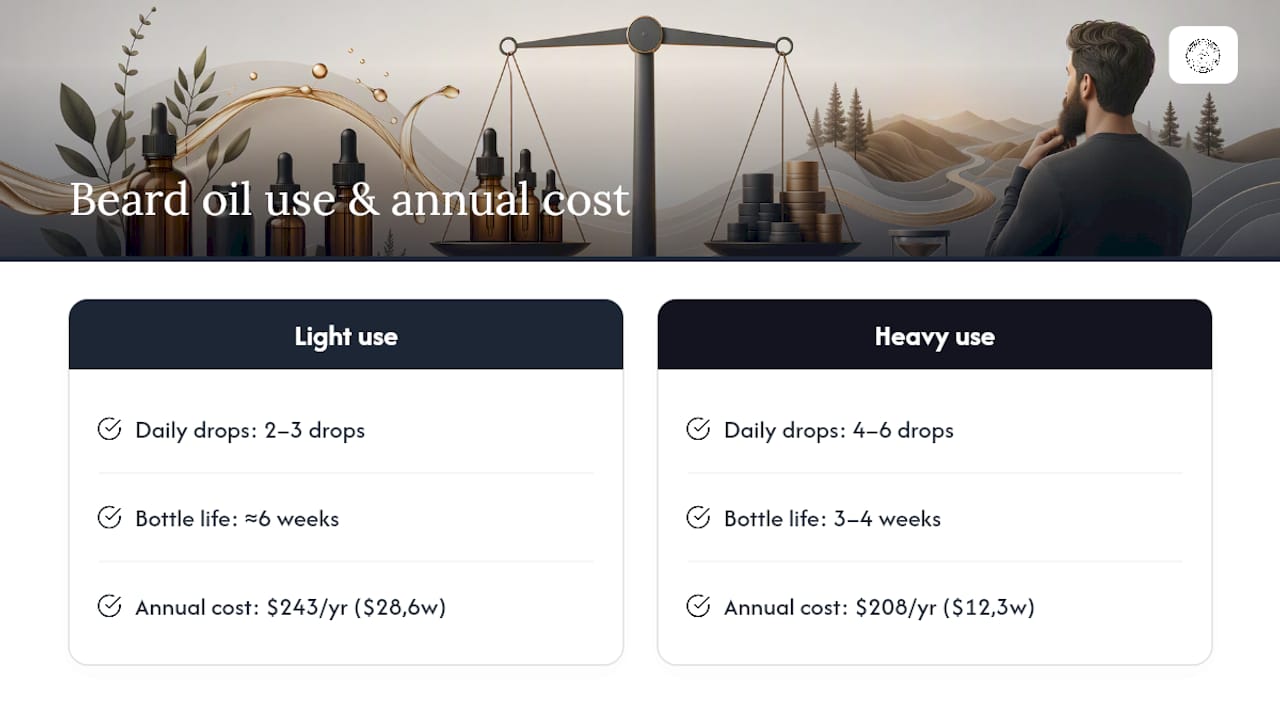
That usage rate matters more for your annual cost than the price tag on any single bottle. A $12 bottle that lasts three weeks costs roughly $208 a year if you're repurchasing at that pace. A $28 bottle that lasts six weeks, by contrast, costs about $243 a year, which is close but not the bargain the lower sticker price suggests. Run this math before assuming cheaper always wins over a full year of use.
Application habits also stretch or shrink that math significantly. Using too much oil per application doesn't improve results. It just accelerates how fast you're back at checkout. Two to three drops, worked from the skin outward through the beard, covers most beard lengths without waste, and getting that ratio right can extend a single bottle by several extra weeks compared to overapplying.
Shop Feared Beard VT: Where to Start Based on Your Budget
Once you know your price band, picking the right Feared Beard VT product is straightforward. If you're buying your first bottle and want a mid-tier natural oil without overthinking scent combinations, the natural beard oil is the simplest starting point, sized and priced for someone who wants small-batch quality without committing to a full grooming overhaul.
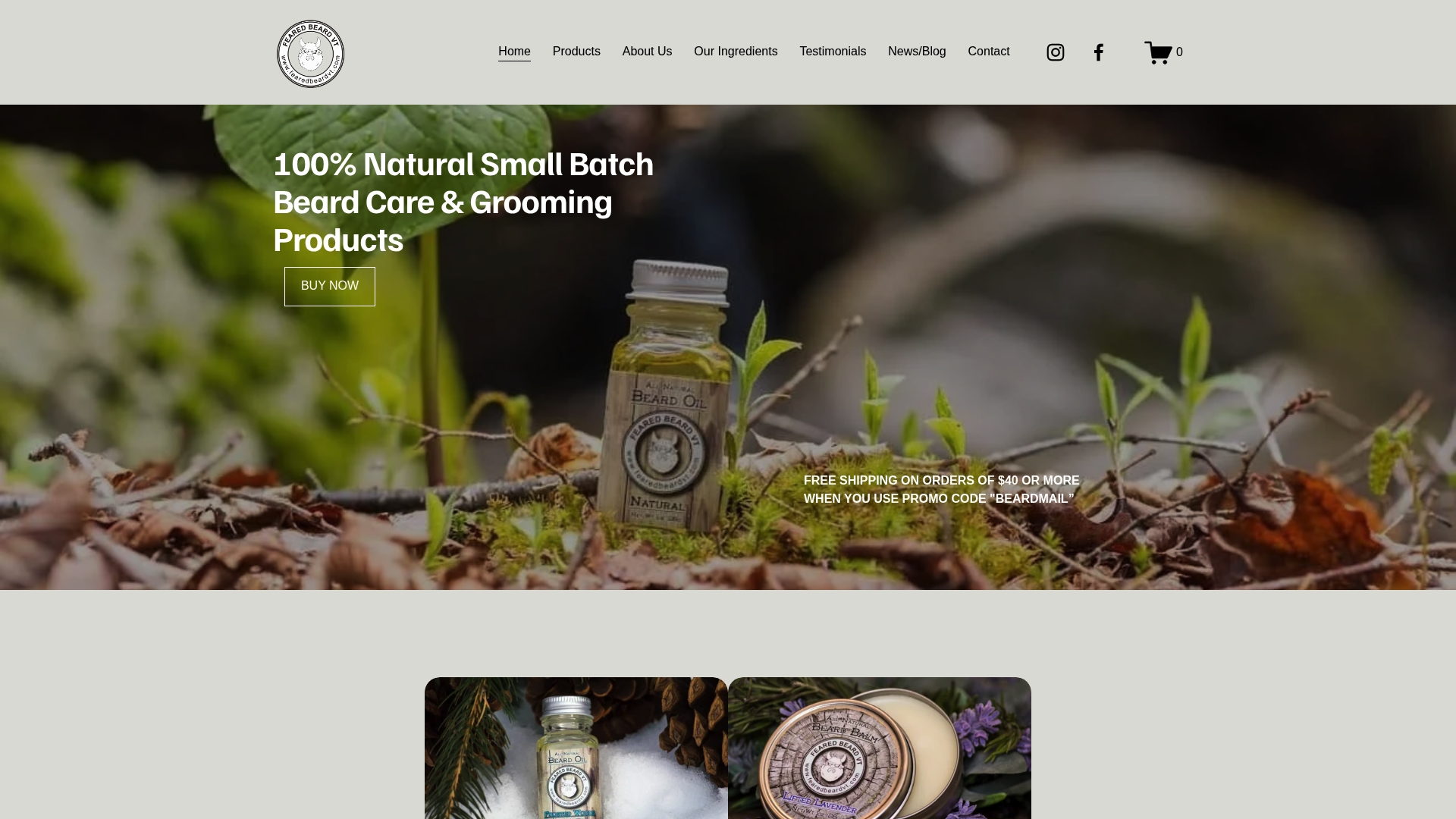
If you're shopping for a gift or want oil and balm together in one purchase, the starter kit covers both hydration and styling in a single order, which is usually simpler than guessing which individual products someone new to beard care actually needs. Every formula is backed by full ingredient disclosure on the ingredients page, so you know exactly what carrier oils and essential oils you're paying for before you check out. Anyone shopping for someone else who isn't sure what they'll like can sidestep the guesswork entirely with a gift card starting at $25, letting the recipient pick their own scent and product type.
Browse the full oil lineup to compare scents and sizes, or start with the main shop page if you want to see balms, soaps, and gift sets side by side before deciding where your budget fits best.
Balancing Cost and Long-Term Beard Care
Buying one well-formulated bottle you use sparingly almost always beats cycling through cheap bottles that run out fast because you're overapplying to compensate for a thin, low-quality carrier oil. Store your oil away from direct sunlight and heat, since both degrade essential oil potency faster than normal use would.
Two to three drops per application is enough for most beards. Anyone who's compared a $10 bottle they finished in three weeks against a $25 bottle that lasted two months already knows which one was actually cheaper.
— Kyle
Sources
- Best Selling Beard Oil For Men: Top 10 Ranked by Real Sales 2026 — ASINsight
- North America beard oil market — ResearchAndMarkets
- King C. Gillette Men's Beard Oil with Argan Oil — Target product page
FAQ
What Is the Best Oil for a Beard?
There's no single "best" oil since it depends on beard length and skin sensitivity, but blends using jojoba, argan, or grapeseed as a carrier tend to absorb well without feeling greasy. Feared Beard VT's natural beard oil is built around that kind of transparent, natural carrier formula.
Is Beard Oil Actually Good for Your Beard?
Yes, when it uses real carrier oils rather than synthetic fillers, beard oil helps soften facial hair and moisturize the skin underneath it, which reduces itching and flaking during the growing-in phase. The benefit comes from the carrier oil quality, not the price tag alone.
Why Is Beard Oil So Expensive?
Beard oil pricing reflects ingredient costs, batch size, and production method more than brand hype. Premium carrier and essential oils cost more to source, and small-batch production adds labor costs that mass manufacturing avoids through scale.
What Is the Best Cheap Beard Oil?
For a budget option under $15, the King C. Gillette beard oil with argan oil at $9.69 is a widely available, well-reviewed choice for a 1 ounce bottle. If you want natural, small-batch quality slightly above the budget tier, Feared Beard VT's products typically land in the $20 to $50 range where formulation quality improves noticeably.
How Much Does Beard Oil Typically Cost?
Most beard oil falls between $10 and $50 for a standard 1 ounce bottle, with the $20 to $50 range holding the largest share of the market at 41% of tracked listings. Prices below $10 are usually synthetic-heavy, while prices above $50 tend to reflect luxury branding rather than dramatically better ingredients.