
Trim the visible split ends now, then switch to a protection routine: hydrate the shaft, cut down on friction, and skip high heat for a few days. Nothing seals a split back together, so the real fix is stopping it from traveling further while healthier hair grows in behind it.
TL;DR:
- Regular trimming with sharp scissors is essential to remove visible split ends and prevent them from worsening.
- Using gentle, sulfate-free shampoos and applying beard oil daily helps maintain hydration and reduce friction that causes splits.
- Avoiding excessive heat styling and harsh chemical treatments minimizes internal hair damage, decreasing splitting risk.
- Managment of short, fragile hairs near the skin requires attention to possible underlying issues like skin conditions or hair-pulling, not just grooming.
- Consistent, simple routines over three months produce better results than complex strategies or infrequent care.
Table of Contents
- What Are Beard Split Ends, and How Do You Spot Them?
- What Causes Beard Split Ends?
- How Do You Fix Split Ends Right Now?
- Building a Prevention Routine That Actually Sticks
- When Split Ends Point to a Bigger Problem
- Why Consistency Wins Over Complexity
- How Feared Beard VT Products Support a Split-End-Free Routine
- Sources
- FAQ
What Are Beard Split Ends, and How Do You Spot Them?
Split ends, known clinically as trichoptilosis, happen when the outer cuticle layer wears away at the tip of a hair and the strand splits lengthwise into thin strands. In a beard, this shows up differently than on scalp hair because the strands are coarser and often curlier, which makes the damage easier to feel than to see at first.
Run your fingers down a section of beard from the skin outward. Splits usually announce themselves as texture problems before you spot them visually.
- Frayed, ribbon-like tips that look almost feathered instead of tapering to a point
- Tiny curled fragments that snap off in your fingers when you comb
- Patches of noticeably shorter, blunt-broken hairs mixed in with normal-length growth
- A rough, static-prone feel concentrated at the very ends rather than throughout the beard
Most split ends cluster at the longest, oldest hairs, the ones that have taken the most abuse from washing, drying, and combing over months. If you're seeing splits on short hairs close to the skin, or noticing them alongside bald patches or scalp irritation, that pattern points toward something other than ordinary wear. More on that later.
What Causes Beard Split Ends?
Split ends are a mechanical failure, not a mystery. Researchers using moving-loop fatigue tests found that hair strands fail under longitudinal shear, the twisting, pulling force that builds up every time a tangled hair gets dragged through a comb or brush. Untreated hair tends to fail at the surface first; bleached or chemically treated hair fails from the inside out and produces longer, faster-spreading splits.
Bleaching and repeated heat styling measurably change hair's internal structure, making it far more prone to splitting, according to research on thermal and chemical hair damage. For a beard, that means anything that dries out or chemically alters the shaft, harsh dyes, hot blow dryers pointed straight at your chin, chlorinated pool water, speeds up the same failure process.
Everyday habits do the rest of the damage. Aggressive towel drying twists and tugs at wet hair, which is already weaker and more elastic than dry hair. Repeated brushing, especially the old advice to brush a set number of strokes daily, adds up to thousands of friction events a month, each one a small shear event on the cuticle. Combing straight through a knot instead of working it loose gently is one of the most common, and most avoidable, causes of a beard riddled with split ends.
How Do You Fix Split Ends Right Now?
Trimming is the only method that actually removes a split end. Trying to "seal" a split with wax, heat tools, or a heavy styling product just glues the frayed strands together temporarily. The split reopens the next time that hair gets combed or rubbed against a collar.
- Comb the beard dry, working from the jawline down to detangle any knots before you touch scissors to hair.
- Isolate a small section between two fingers, no wider than a quarter inch, so you can see exactly where the healthy shaft ends and the frayed tip begins.
- Snip just above the split, using sharp, dedicated barber or beard scissors rather than household scissors, which crush the shaft instead of cutting it cleanly.
- Repeat section by section rather than trimming the whole beard at once, so you remove only damaged length and keep your shape intact.
If splits are scattered and minor, a light dusting trim across the ends is enough. If a whole section looks frayed or you can't find a clean edge, a fuller trim resets the length and gives you a uniform baseline to protect going forward.
Pro Tip: Right after trimming, wash with a gentle, sulfate-free cleanser, pat dry, and apply a leave-in oil while the beard is still slightly damp. Skip the blow dryer and any hot tools for 48 hours so the freshly cut ends aren't immediately stressed again.
Building a Prevention Routine That Actually Sticks
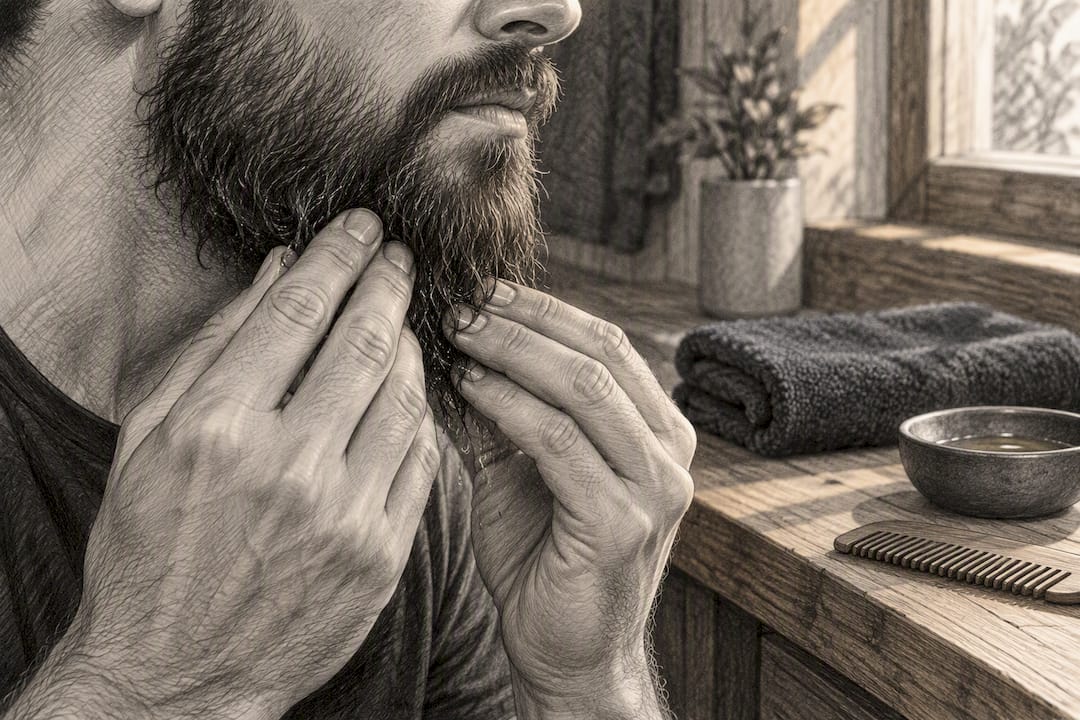
Preventing new split ends comes down to reducing friction and keeping the shaft hydrated, consistently, not occasionally. The American Academy of Dermatology recommends gentle shampooing, regular conditioning, and minimal handling of wet hair, since wet strands are more elastic and more prone to snapping or splitting under stress.
A few habits do most of the work:
- Wash two to three times a week with a sulfate-free cleanser; daily washing with harsh soap strips the natural oils that keep the cuticle flat.
- Follow every wash with a rinse-out or leave-in conditioner to smooth the cuticle back down and cut friction during combing.
- Apply beard oil daily to coat the shaft in lightweight lipids, and layer in a beard balm on days you want light hold along with that protection.
- Detangle from the tips upward, working knots loose in small sections instead of dragging a comb from root to tip.
- Switch from a cotton towel to a microfiber one, and press water out rather than rubbing, which is the single biggest source of unnecessary shaft stress after a shower.
Combing technique matters as much as product choice. A wide-tooth or metal comb glides through hair with less snagging than a fine-toothed plastic one, and limiting yourself to a handful of passes a day, rather than the outdated "100 strokes" habit, meaningfully cuts down on repetitive mechanical stress on the cuticle.
Pro Tip: If you swim regularly, rinse your beard with fresh water immediately after, chlorine dries out the shaft fast and is one of the most overlooked drivers of split ends in guys who train or swim year round, per the AAD's seasonal hair care guidance.
Diet and hydration play a supporting role too. A beard is made of the same keratin as scalp hair, and a shaft built from a well-nourished follicle simply holds up better under daily wear than one starved of protein, healthy fats, and water.
When Split Ends Point to a Bigger Problem
Most split ends are wear and tear, but a few patterns deserve a second look. Splitting concentrated on short hairs close to the skin, especially paired with patchy thinning or a beard that looks broken rather than gradually tapered, can be a sign of hair-pulling behavior or an inflammatory skin condition rather than ordinary grooming damage.
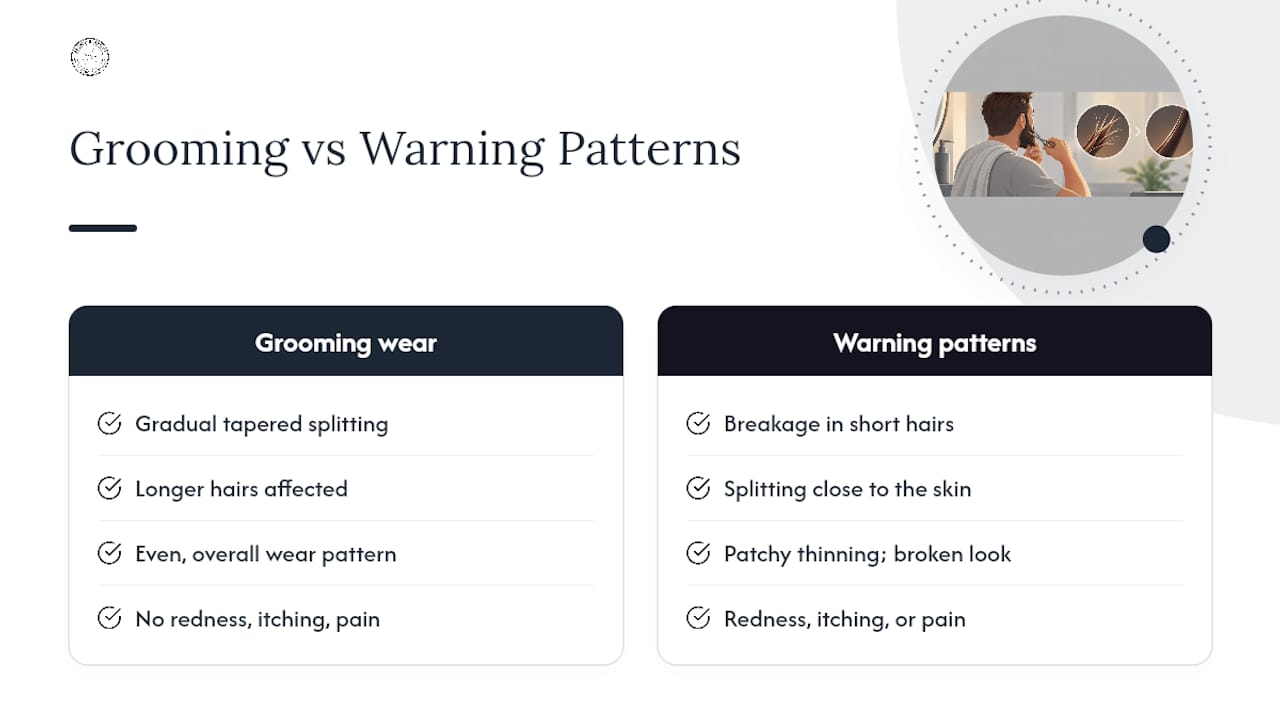
Dermatologists and trichologists use tools like the tug test and trichoscopy, a magnified scalp and skin exam, to tell mechanical damage apart from conditions that need medical treatment. If you notice sudden patchy loss, redness, itching, or pain along with the splitting, that combination is worth a professional look rather than another round of oil and patience. Taking a monthly photo of the same section of beard is a simple way to track whether a routine change is actually working or whether the pattern is worsening.
Why Consistency Wins Over Complexity
The biggest mistake I see guys make is chasing a complicated five-step regimen instead of nailing two habits: trim on a schedule, and oil every night. Biomechanics research backs this up. Removing damaged length and giving new growth roughly 8 to 12 weeks of gentler handling is what actually produces visible change, not a new serum.
A routine that survives busy weeks beats a perfect one you abandon by February.
— Kyle
How Feared Beard VT Products Support a Split-End-Free Routine
Effective beard care focuses on consistent hydration and reduced friction. The beard oils are formulated with 100% natural ingredients to coat each strand in lightweight lipids, the same protective layer that dry, damaged hair loses first, while the beard balms add light hold and a bit of extra shaft protection on days when your beard takes more handling than usual.

Pair either one with the large metal comb, which glides through tangles with far less snagging than a plastic comb, cutting down on the exact friction that drives splitting in the first place. If you're starting from scratch, the starter kit bundles oil and balm together so you're not guessing at what to buy first. Every product is hand-formulated in small batches with all-natural ingredients, and the full shop has scented and unscented options if you have sensitive skin. Start with the oil and comb, add the balm once your beard is past the worst of the damage, and give the routine a few weeks before judging results.
Sources
- The biomechanics of splitting hairs (Royal Society Interface Focus, 2023)
- Hair damage from bleaching and thermal styling (PMC)
- Hair styling without damage (American Academy of Dermatology)
FAQ
How Do I Get Rid of Split Ends in My Beard?
Trim the frayed tips with sharp scissors since nothing can permanently reseal a split shaft. After trimming, switch to a gentler routine: sulfate-free wash, daily beard oil, and less heat and friction, so new growth doesn't develop the same damage.
What Is the 3-Month Beard Rule?
There's no single clinical standard behind this phrase, but it generally refers to giving a beard around three months of consistent, low-damage care before judging results. That lines up with the roughly 8 to 12 week window research suggests it takes for protected new growth to visibly outpace old, split-prone hair.
Are Beard Split Ends Normal?
Yes, some splitting is a normal result of washing, combing, and daily wear on facial hair, especially near the longer, older tips. It becomes a concern when splits appear on short hairs near the skin or show up alongside patchy loss or scalp irritation.
Do Split Ends Eventually Go Away on Their Own?
No, a split end won't heal or grow back together. It stays split and often travels further up the shaft until you cut it off, which is why trimming, not waiting it out, is the only real fix.