
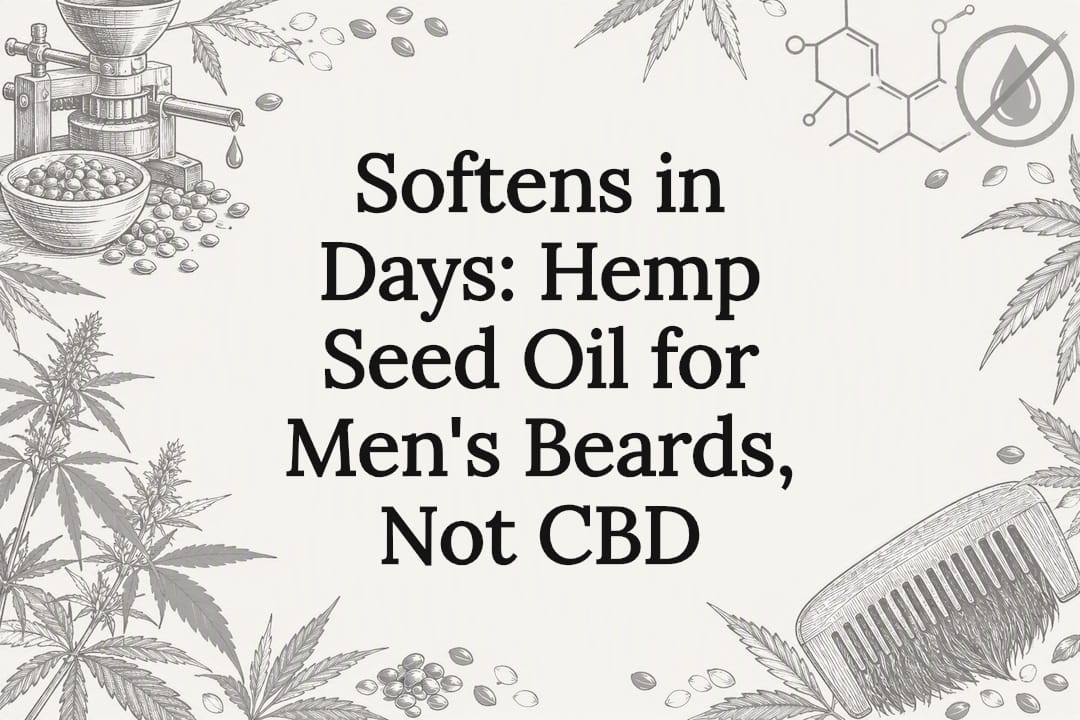
Yes. For most men, hemp seed oil is a lightweight, non-greasy ingredient that improves beard softness and calms the skin beneath it. The omega fatty acids absorb fast as a "dry oil," easing irritation without leaving residue on your jaw. Expect softer strands within days and less itch or flaking after consistent use for a couple of weeks.
TL;DR:
- Hemp seed oil is a lightweight, fast-absorbing oil that calms the skin, reduces itch, and increases beard softness within two to three weeks of consistent use.
- It contains no THC or meaningful CBD, making it legal, non-psychoactive, and suitable for all states, unlike CBD oils which are often confused with hemp seed oil.
- Applying hemp seed oil after showering, massaging into damp beard and skin, ensures optimal absorption and skin health benefits.
- It improves skin barrier function and reduces inflammation, helping to prevent beardruff and promoting healthier, more manageable facial hair.
- Hemp seed oil supports skin health rather than hair growth, and patch testing is recommended for those with seed allergies or sensitive skin.
Table of Contents
- Hemp Seed Oil vs. CBD and THC: Clearing Up the Confusion
- What Research Says About Hemp Seed Oil for Beard and Skin Health
- How Should You Apply Hemp Seed Oil to Your Beard?
- Hemp Seed Oil, Jojoba, Argan, Castor, or Grapeseed: Which Should You Choose?
- Is Hemp Seed Oil Safe for Every Beard?
- How Feared Beard VT Formulates With Hemp-Friendly Blends
- What Most Beard Care Advice Gets Wrong About Hemp Seed Oil
- Where to Try Hemp-Friendly Beard Oil and Balm
- Sources
- FAQ
Hemp Seed Oil vs. CBD and THC: Clearing Up the Confusion
Hemp seed oil comes from cold-pressing the seeds of the hemp plant, not from the flowers or leaves where cannabinoids concentrate. That means it carries no meaningful CBD and no THC, so it will not get you high, show up on a drug test, or trigger the regulatory questions that follow CBD oil.
This distinction matters more than most shoppers realize. A lot of beard-oil labels use "hemp" loosely, and buyers assume they are getting the same compound found in CBD tinctures. They are not.
Hemp seed oil is a nutrient-dense carrier oil, closer in function to jojoba or grapeseed than to any cannabinoid extract. That makes it:
- Legal to buy and use topically in all 50 states, with no THC-related restrictions
- Rich in omega-3 and omega-6 fatty acids, plus vitamin E
- Free of the psychoactive compounds that complicate CBD sourcing and labeling
What Research Says About Hemp Seed Oil for Beard and Skin Health
The fatty-acid profile in hemp seed oil, particularly gamma-linolenic acid alongside omega-3 and omega-6, supports the skin's barrier function and helps calm inflammation. Under a beard, that inflammation usually shows up as redness, tightness, or the flaking men call "beardruff." Calm skin grows healthier hair, and broader review evidence on essential fatty acids backs the idea that a better skin environment indirectly supports stronger, more manageable facial hair.
The "dry oil" classification is the other half of the story. Hemp seed oil absorbs quickly and sits close to non-comedogenic in practical use, so it will not clog pores or leave the greasy sheen that heavier oils like castor can produce. That makes it a smart pick for guys with oily or combination skin who have avoided beard oil in the past because everything they tried felt too heavy.
What users typically report:
- Noticeably softer beard hair within a matter of days
- Reduced itch and flaking within roughly two weeks of consistent use
- A finish that feels hydrated rather than slick or shiny
Here's a number worth sitting with: itch and flaking improvements show up around the two-week mark with daily application, not overnight. Beard care rewards consistency more than any single product choice.
How Should You Apply Hemp Seed Oil to Your Beard?
Timing and technique matter as much as the oil itself. Here's the routine that gets the best results:
- Apply right after a shower, when your beard is slightly damp. Damp hair holds oil better and helps it spread evenly instead of sitting on the surface.
- Measure by beard length. A short beard needs roughly 3 to 5 drops as a starting point; longer beards may need double that.
- Warm it in your palms first. Rub your hands together for a few seconds so the oil spreads thin and warm, which helps it distribute rather than pool.
- Massage down to the skin, not just through the hair. This is the step most men skip, and it's the one that actually treats the itch and flaking under the beard.
- Comb or brush through to distribute evenly from root to tip and train the direction of growth.
- Layer a balm on top if you want hold. Hemp seed oil moisturizes but does not style, so reach for something with beeswax or shea butter when you need shape.
Pro Tip: Apply hemp seed oil at night instead of in the morning if your beard tends to feel dry by midday. It gives the oil hours to absorb fully before you touch your face or lie on a pillow, so you wake up with a softer beard instead of an oily one.
Consistency over two to three weeks is what separates men who see real change from men who give up after three uses.
Hemp Seed Oil, Jojoba, Argan, Castor, or Grapeseed: Which Should You Choose?
Every carrier oil behaves differently on skin and hair, and picking the right one (or the right blend) depends on what your beard actually needs.
- Hemp seed oil absorbs fast, finishes dry, and works well for oily or acne-prone skin thanks to its non-comedogenic profile.
- Jojoba oil mimics natural sebum closely and is gentle enough for sensitive skin, though it absorbs a touch slower than hemp.
- Argan oil brings noticeable shine and softness but sits heavier, making it better for dry or coarse beards than oily skin.
- Castor oil is thick and occlusive, prized for hold and shine in blends but too heavy to wear alone on sensitive or breakout-prone skin.
- Grapeseed oil is another dry, fast-absorbing option, close to hemp in finish, though it carries fewer anti-inflammatory compounds.
For most men, hemp seed oil alone covers daily hydration and calming. Blend it with a touch of castor if you want extra shine and hold for special occasions, or pair it with jojoba if your skin runs sensitive.
Is Hemp Seed Oil Safe for Every Beard?
Run a patch test before working any new oil into your full routine. Put a couple of drops on your inner forearm, wait 24 hours, and check for redness, bumps, or itching before applying it to your face.
- Skip it if you have known seed or plant allergies, since hemp seed oil is derived from a botanical seed and cross-reactions are possible.
- Watch for signs of a reaction: unusual redness, small bumps, or persistent itching where none existed before.
- Understand the CBD distinction: hemp seed oil carries negligible CBD or THC, so it does not carry the same regulatory or interaction concerns tied to topical CBD oil products, which are formulated differently and subject to separate safety scrutiny.
If you already use a CBD-based topical for another reason, treat it as a separate product with its own guidelines rather than assuming it behaves like a seed-oil beard product.
How Feared Beard VT Formulates With Hemp-Friendly Blends
Feared Beard VT builds every product in small batches using 100% natural ingredients, which means no synthetic fillers diluting the fatty acids that actually do the work. Hemp seed oil rarely performs its best alone in a finished product. Formulators typically pair it with heavier oils for hold or lighter oils for glide, and Feared Beard VT's ingredient standards reflect that same approach, balancing hemp-friendly blends for texture, scent, and shelf stability without sacrificing the anti-inflammatory benefits.
- Small-batch production keeps ingredient ratios consistent bottle to bottle.
- Carrier oils are blended specifically to avoid the greasy finish men complain about with single-oil products.
- Repeat customer feedback points to noticeable softness and a calmer beard-line within the same two-to-three-week window the research supports.
What Most Beard Care Advice Gets Wrong About Hemp Seed Oil
Most articles on this topic treat hemp seed oil like a miracle growth serum, and that's the wrong frame entirely. The fatty-acid research supports skin health and hair conditioning, not follicle stimulation. If you want a beard that grows faster, hemp seed oil won't get you there. If you want a beard that feels better, itches less, and looks less patchy because the skin underneath isn't inflamed, it earns its place.
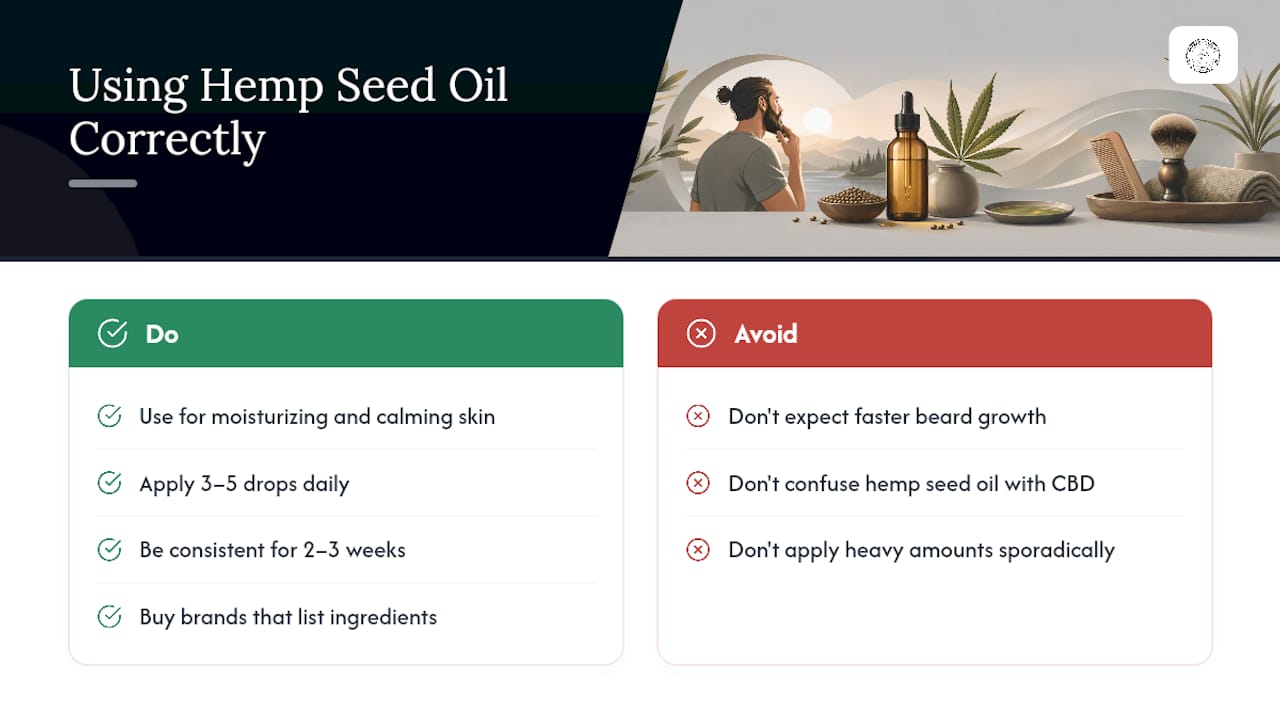
The bigger mistake is treating hemp seed oil as interchangeable with CBD oil. That confusion has convinced some men to overpay for products marketed on cannabinoid buzzwords when a well-formulated seed-oil blend does the actual job of moisturizing and calming skin, at a fraction of the complexity.
Prioritize consistency over quantity. Three to five drops massaged into the skin every day for two to three weeks will outperform a heavy application used sporadically. Buy from a brand that lists its ingredients plainly, skips synthetic filler oils, and blends hemp seed oil with complementary carriers instead of relying on marketing language to do the selling.
— Kyle
Where to Try Hemp-Friendly Beard Oil and Balm
Hydration without the grease is the whole point, and that's exactly what Feared Beard VT builds into every batch. Instead of guessing which drugstore blend might work, you get small-batch oils and balms formulated with hemp-friendly carriers designed to soften your beard and calm the skin underneath, without the heavy or oily feel some oils leave behind.
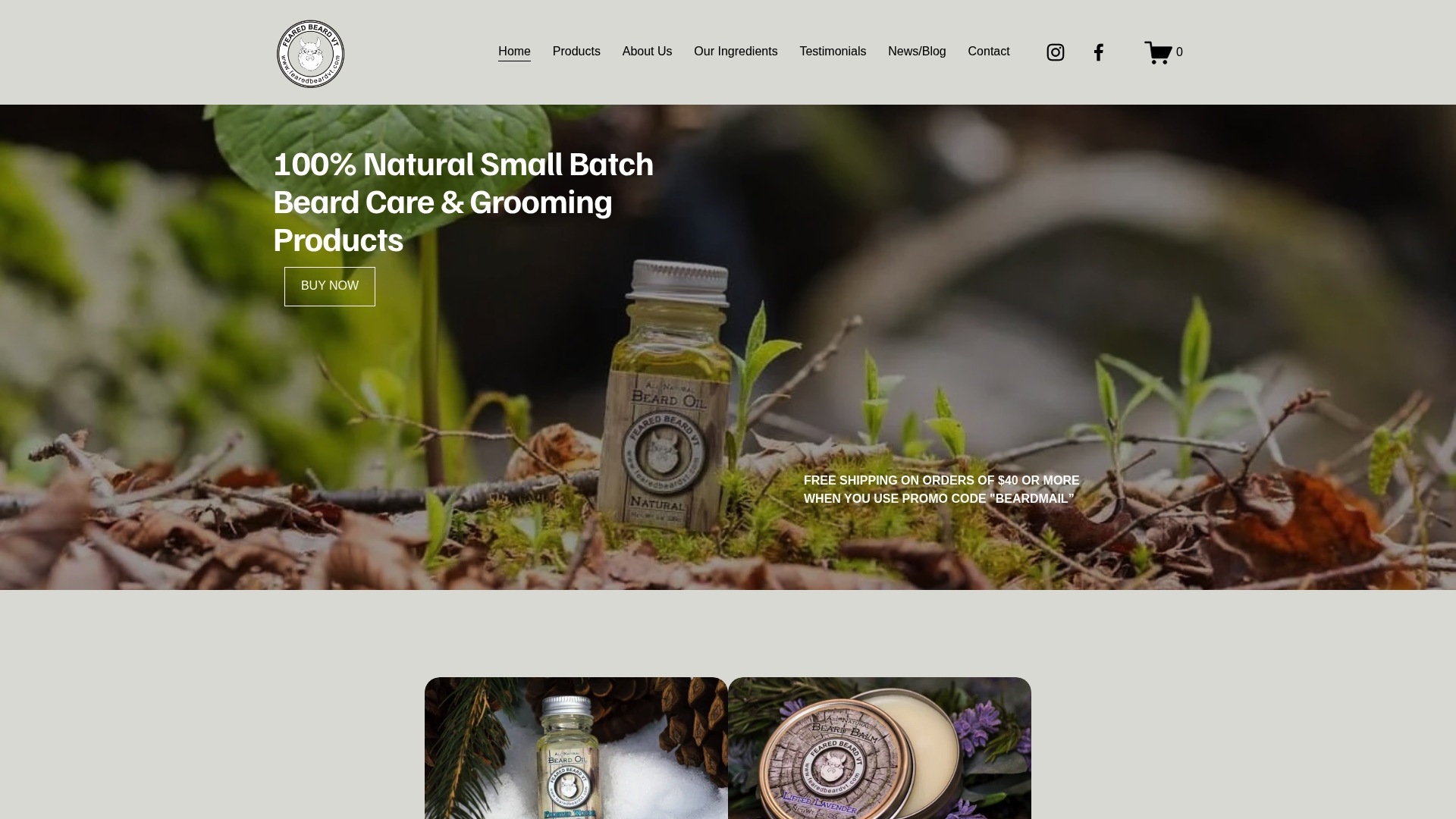
Browse the full beard oils collection to find a scent and formula that fits your routine, or check out the natural beard balm if you want added hold on top of daily hydration. Every product is hand-formulated in small batches using all-natural ingredients, so what you apply to your face is exactly what's listed on the label. Ready to start? Visit the Feared Beard VT shop and pick the oil or balm that matches your beard length and skin type.
Sources
This article draws on Healthline's overview of hemp oil for skin, peer-reviewed research on fatty acids and skin health and essential fatty acids, plus practical grooming guidance from independent beard-care blogs.
- Healthline — Hemp oil for skin
- NCBI — Article on fatty acids and skin health (PMC6154611)
- NCBI — Reviews on essential fatty acids and skin/hair (PMC6385314)
FAQ
What oil helps beard growth the most?
No single oil is proven to speed up beard growth itself; growth is driven mostly by genetics and hormones. What oils like hemp seed oil, jojoba, and castor actually do is improve the skin and hair condition underneath, which reduces breakage and helps to exist hair look fuller.
Is hemp seed oil good for the face?
Yes. Hemp seed oil is classified as a non-comedogenic dry oil that absorbs quickly, making it a reasonable option for oily, combination, or acne-prone skin, including the skin beneath a beard.
Is hemp seed oil good for hair growth?
Hemp seed oil supports the skin barrier and reduces inflammation, which creates a healthier environment for hair to grow rather than directly triggering new growth. Think of it as conditioning support, not a growth stimulant.
Is it safe to use CBD oil on my beard?
Hemp seed oil and CBD oil are different products with different safety profiles. Hemp seed oil contains negligible CBD or THC and is broadly safe for topical use, while CBD-specific topicals carry separate regulatory and formulation considerations worth researching before use. Feared Beard VT's beard oils are formulated from natural carrier oils, not CBD extracts, so the safety profile stays straightforward.