

Stubble calls for a few drops, short beards need a slightly higher amount, medium beards run a moderate range, long beards take more drops, and extra long growth can need substantially more. Those numbers are starting points, not gospel. Every dropper and every oil differs in thickness, so if your beard still feels dry after you work the oil through, add 1 to 2 more drops. A slightly damp beard soaks up oil faster and spreads it more evenly than a bone dry one.
TL;DR:
- Beards over 3 inches typically require more drops, with coarse or thick hair needing an additional 1 to 3 drops beyond length-based recommendations.
- Applying oil to a damp beard after showering ensures better absorption and coverage with fewer drops needed.
- Most men should start with the lower end of the suggested range, then adjust by small increments based on how the beard feels after distribution.
- Using more oil than necessary can cause buildup, skin irritation, and attract lint, making precise dosing crucial for optimal results.
- Dosing accuracy depends on factors like dropper size, oil viscosity, and room temperature, so performance checks guide proper application.
Table of Contents
- A Practical Beard Oil Dosing Chart By Length
- How Do You Apply Beard Oil the Right Way?
- How Often Should You Use Beard Oil?
- Adjusting Beard Oil Amounts For Hair Type And Density
- How Do You Fix Common Beard Oil Dosing Mistakes?
- Why These Dosing Numbers Hold Up In Practice
- The Real Problem With Most Beard Oil Advice
- Ready To Put A Dosing Chart To Work?
- Sources
- FAQ
A Practical Beard Oil Dosing Chart By Length
Drop counts get thrown around a lot in grooming advice, and most of them are close enough to be useful as long as you treat them as a range, not a rule. The chart below reflects what Balm Bench and other grooming guides commonly recommend, adjusted for how oil viscosity and beard density change the math in real life.
- Stubble (under 1/2 inch): a small number of drops. At this length you're mostly conditioning skin, not hair, so less is more.
- Short (1/2 to 1 inch): a modest amount of drops. Oil the skin first, then run a thin layer through the hair itself.
- Medium (1 to 3 inches): a moderate number of drops. Comb through after application so the oil reaches strands near the skin, not just the surface.
- Long (3 to 6 inches): a higher quantity of drops, applied in sections rather than dumped all at once.
- Extra long (6+ inches): a significantly larger number of drops, often best delivered as two light passes instead of a single heavy dose.
Density and hair type shift these numbers in both directions. A coarse or very thick beard usually needs an extra 1 to 3 drops on top of the length-based range, because there's simply more surface area to coat. A lightweight, fast absorbing formula, on the other hand, often needs fewer drops than a rich, heavy blend to get the same coverage, since lighter carrier oils like jojoba and grapeseed spread thinner than something like castor oil.
Here's the part most dosing charts skip: drop counts are inherently imprecise. Dropper bore size, how far you tilt the bottle, and even room temperature all change how big a "drop" actually is. Culturedgrooming's guide notes that weighing oil in grams is the only truly repeatable measurement, but almost nobody does that for daily grooming, and you don't need to. What you need is a quick performance check: no visible shine sitting on top of the hair, and no oil transferring to your hand, phone, or collar when you touch your beard an hour or two later. If both of those are true, your dose is right.
How Do You Apply Beard Oil the Right Way?
Getting the amount right matters less if the application technique is off. Oil that sits on top of the hair instead of reaching the skin underneath does almost nothing for dryness or itch, no matter how many drops you used.
- Apply right after a shower, while your beard is still slightly damp. Damp hair and skin absorb oil more readily, which means better spread with less product.
- Measure your dose. A standard dropper delivers roughly one drop per squeeze; a pump bottle typically releases the equivalent of 2 to 3 drops per "pump" or "whack," and a coin sized pool in your palm is close to 4 to 6 drops for reference.
- Warm the oil in your palms by rubbing your hands together, then work your fingertips into the skin underneath the beard first, not just the visible hair.
- Comb or brush through to pull the oil outward and distribute it evenly from root to tip.
- Check the feel. If your beard still tugs or feels rough after distribution, add 1 to 2 more drops and focus them on the underside and chin, where hair tends to run driest.
Pro Tip: For beards past four or five inches, split your dose into two light passes rather than one big application. The first pass hits the skin and inner hair, the second catches the outer layer, and you avoid that heavy, weighed down feeling that comes from applying everything at once.
How Often Should You Use Beard Oil?
Once a day, right after your shower, is the standard routine for most beards and most skin types. If you have very dry skin or live somewhere cold and dry for months at a time, twice daily application, morning and night, keeps flaking and itch under better control.
- Morning: apply after showering for both absorption and styling benefits through the day.
- Night (optional): a light second application helps heavier or coarser beards that dry out faster.
- Seasonal shifts: increase frequency in winter when indoor heating strips moisture from the air, and scale back slightly in humid summer months when your skin already retains more moisture.
- Product order: apply oil first for skin hydration, then follow with a beard balm if you want hold and shape on top.
Adjusting Beard Oil Amounts For Hair Type And Density
The length-based chart is a solid starting point, but hair texture changes the math almost as much as length does.
- Curly or coiled beards (Types 3 to 4) generally need more drops compared with straight hair of the same length, since coiled strands have more surface area and friction, which soaks up oil faster.
- Thick, dense beards often benefit from targeted reapplication at the chin tips and under the chin rather than one large upfront dose. Those spots dry out first and get missed easiest.
- Thin or patchy beards should use fewer drops and a lighter formula. Heavy oils can weigh down sparse growth and make it look flatter and greasier rather than fuller.
- Example conversion: if the medium length range is 4 to 6 drops, a coarse, dense medium length beard might reasonably start at 6 to 8 instead.
None of this requires guesswork math. Start at the low end of your length's range, run the performance check after distribution, and adjust up in small increments until the feel is right.
How Do You Fix Common Beard Oil Dosing Mistakes?
Most dosing problems fall into one of two camps, and both are fixable within a day or two.
- Too much oil shows up as visible sheen, oil transfer to your phone or pillowcase, and hair that attracts lint or dust. Fix it by blotting excess with a paper towel, using fewer drops next time, and washing with a gentle beard shampoo if buildup has already set in.
- Too little oil feels like friction when you comb, plus persistent itch or flaking. Add 1 to 2 drops and apply to a damp beard next time to improve absorption.
- Clogged pores or skin irritation call for switching to a lighter carrier oil and avoiding formulas heavy on essential oils if your skin runs sensitive.
A quick note on overuse: using more oil than your beard needs doesn't just waste product. Excess oil sitting on the skin can clog pores and attract dust and lint over time, which is the opposite of what you're going for. Starting small and building up beats guessing high and scaling back. If irritation or flaking persists beyond a week or two of adjusted dosing, it's worth getting it checked, since conditions like seborrheic dermatitis can mimic simple dryness but need different treatment.
Why These Dosing Numbers Hold Up In Practice
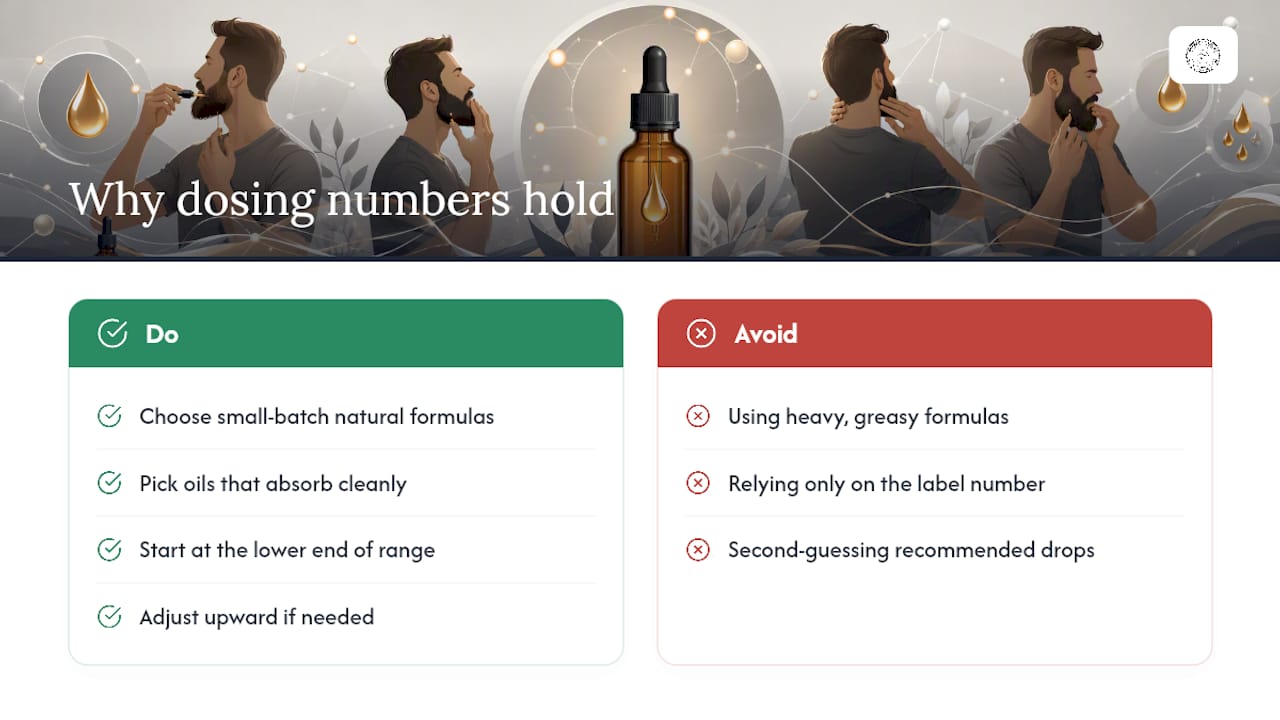
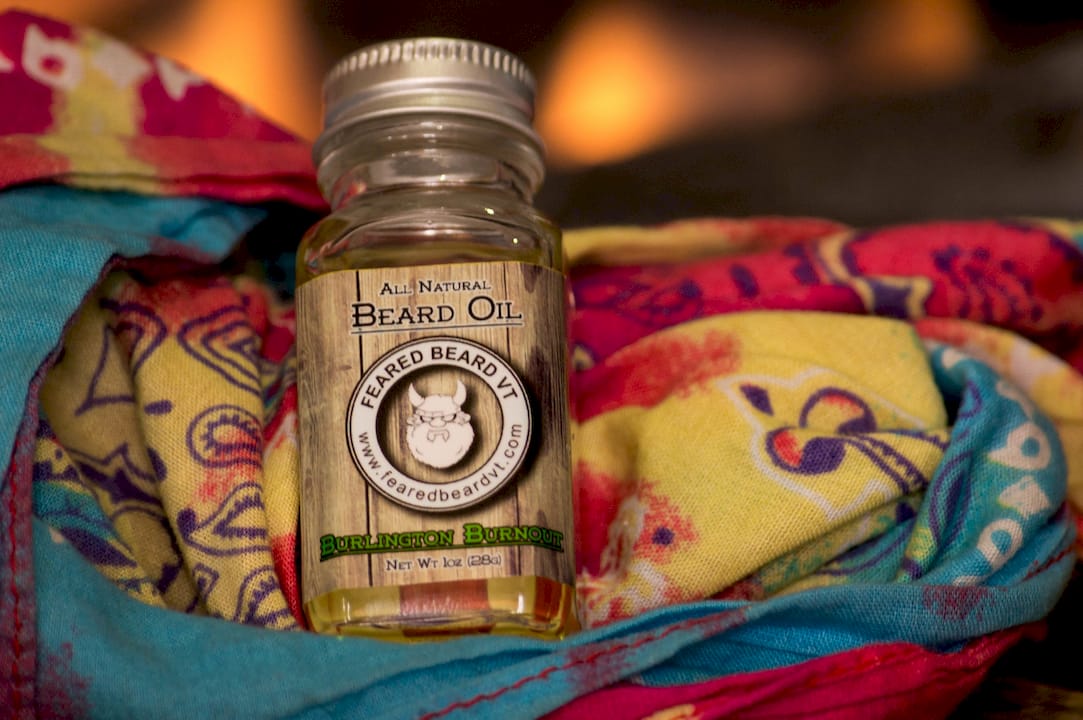
These ranges aren't pulled from a lab study. They're built from how real beards behave under real grooming routines, which is exactly why Feared Beard VT approaches formulation the way it does: small batches, all natural ingredients, and a focus on how a beard actually feels after application rather than a fixed number on a label.
The beard oils and balms are crafted in small batches using natural ingredients chosen to hydrate skin and condition hair without heavy, greasy residue that reduces product use. That matters for dosing, because a formula that absorbs cleanly lets users rely on recommended drop ranges without second guessing. A product like Draugr's Reserve Premium Beard Oil is built around that same idea: a blend light enough to work with standard drop counts, not against them.
A dosing chart only works if the oil behaves predictably. When a formula absorbs cleanly and doesn't sit heavy on the skin, the standard drop ranges by length hold up in daily use instead of needing constant guesswork.
Test any new oil on the lower end of its range first, regardless of the brand, and adjust from there.
The Real Problem With Most Beard Oil Advice
Most beard oil guides treat drop counts like a prescription, and that's backwards. A drop from a narrow gauge dropper and a drop from a wide one can differ by close enough to double the volume, which means two guides can both be "right" while recommending different numbers. The chart above is a starting point precisely because no chart can account for your specific dropper, your specific oil's viscosity, or how dry your skin runs this particular week.
What actually works is treating the first two weeks with any new oil as a calibration period. Start at the bottom of your length's range, run the sheen and transfer check after an hour, and adjust by a drop or two at a time. Most men land on their ideal dose within three or four applications and then stop thinking about it entirely, which is the goal. The chart gets you close fast. Your beard, not the bottle, decides the rest.
— Kyle
Ready To Put A Dosing Chart To Work?
A dosing chart only helps if the oil behind it is worth measuring out in the first place. Some oils and balms are built in small batches from natural ingredients so a few drops go further and absorb cleanly, rather than sitting on top of the beard like some heavier oils. If you're starting from scratch, the Starter Beard Care Kit gives you a low commitment way to test the dosing ranges above without overcommitting to a full size bottle before you know your ideal amount. For beards already dialed in on a routine, the full beard oils collection covers a range of scents and unscented options for sensitive skin. Follow the length-based chart, test small amounts first, and adjust from there.
Sources
- How Much Beard Oil Should You Use? | Balm Bench
- How To Apply Beard Oil the Right Way (2026) (Perfect Guide)
- Seborrheic dermatitis — Mayo Clinic
- Carrier oils: Healthline
FAQ
Can You Use Too Much Beard Oil?
Yes. Excess oil shows up as visible sheen, transfer to your phone or pillowcase, and hair that picks up lint and dust more easily. If that happens, blot the excess, use fewer drops next time, and consider a lighter formula.
Should Beard Oil Go On Wet Or Dry Hair?
Apply beard oil to a slightly damp beard, right after showering, rather than fully dry hair. Damp hair and skin absorb oil more efficiently, so you typically get better results with fewer drops than applying to a dry beard.
How Long Does 2 Ounces Of Beard Oil Last?
It depends on beard length and daily dose, but most men using a few drops per day get roughly one to three months out of a 2 ounce bottle. Longer beards using about 8 drops daily will burn through a bottle faster than someone with stubble using 1 to 2 drops.
How Many Times A Day Should You Apply Beard Oil?
Once a day, usually right after showering, works for most beards and skin types. Twice daily application, morning and night, is worth it for very dry skin or cold, dry climates where a single dose doesn't hold through the day.
Does Feared Beard VT Sell Beard Oil In Different Scents?
Yes, Feared Beard VT's beard oil lineup includes a range of scents along with unscented options for sensitive skin. Current products and pricing are available on the Feared Beard VT site.