
If your beard grows in patchy, start with heavy stubble or a short goatee and keep every edge sharp. Trim to 3–5mm, define your neckline tonight, and check back in every 48 to 72 hours to keep the borders clean.
TL;DR:
- Shorter beard lengths between 3 and 8mm conceal patchiness more effectively than longer styles, as they minimize skin exposure and contrast.
- Regular trimming and defining borders every 48 to 72 hours is essential to maintain a sharp look and prevent patchiness from appearing neglected.
- Use a lightweight beard oil and a precision trimmer to hydrate and shape, focusing on softening thin patches without adding weight or bulk.
- Cosmetic techniques like directional brushing, fillers, and tints provide instant visual improvements by hiding gaps without growth changes.
- Growth treatments like minoxidil may produce results over three to six months, but only after mastering grooming and trimming routines.
Table of Contents
- Patchy Beard Styling: Which Length Actually Fits Your Growth?
- What's the Right Grooming Routine and Toolkit?
- Optical Tricks: Fillers, Tint, and Brushing That Actually Fool the Eye
- Can You Actually Grow More Density? Minoxidil, Derma Rolling, and Realistic Timelines
- Barber-Backed Advice on Grooming Sparse Facial Hair
- Precision Beats Bulk: The Editorial Take
- Which Feared Beard Products Match Your Routine
- Sources
Patchy Beard Styling: Which Length Actually Fits Your Growth?
Before you touch a trimmer, figure out where your hair actually grows. Stand in good light and take three photos: straight on, left profile, right profile. Barbers use this exact mapping method to spot the strongest growth zones before recommending a style, and you can do the same thing with your phone camera in under two minutes.
Most patchy beards fall into one of three patterns: thin cheeks with a strong jawline and chin, thin chin with fuller cheeks, or uneven density across the whole face. Each pattern points toward a different answer.
If your cheeks are the weak zone, lean into anything chin-forward. A goatee, an extended goatee, or a chin strap lets your strongest hair do the talking while the trimmer erases the parts that aren't cooperating. A Van Dyke (mustache plus pointed chin beard, cheeks shaved clean) works especially well here because it turns a weakness into a deliberate line instead of an accident.
If your chin is thin but cheeks fill in fine, a short even beard at 5 to 8mm (guard #2 to #3) usually reads as full and intentional. Keep it tight to the jaw rather than letting it grow long and stringy, which only draws attention to the sparse spots.
If density is inconsistent everywhere, heavy stubble at 3 to 5mm (guard #1 to #2) is the most forgiving length that exists. Shorter hair means less contrast between skin and hair, so gaps that would look obvious at 15mm practically disappear at 4mm. This is the default recommendation for a reason: it hides more patchiness per millimeter than any other length, according to grooming guides that specialize in fixing patchy beards.
Designer stubble, sitting a shade longer at 5 to 6mm with crisp, barber-sharp borders, splits the difference between stubble and a short beard. It's a strong pick if you want a bit more visual weight without risking the longer, patchier look.
When you sit in the barber's chair, use language that gets you the right result the first time:
- "Short, heavy stubble, guard two, no scissor work on top."
- "Low neckline, two fingers above the Adam's apple."
- "Fade the cheeks into the stubble, don't leave a hard line."
- "Keep the cheek line soft, not boxed."
Avoid two things regardless of your pattern: a high cheek line (shaving straight across creates a stark boundary that highlights exactly where your hair stops) and a full boxed beard grown past 10mm without density to support it. Length beyond what your follicles can back up is the single fastest way to make patchiness look like neglect instead of a style choice. The current grooming trend toward fades, precise borders, and shorter overall lengths exists specifically because that approach turns thin spots into part of the design rather than a flaw to hide.
Pro Tip: Ask your barber to "taper the temples into the beard" even if you're not fading your hair. A slight gradient at the top of the beard line tricks the eye into reading uneven density as a deliberate shape.
What's the Right Grooming Routine and Toolkit?
Styling gets you 80 percent of the result. The other 20 percent comes from a routine you actually stick to.
Daily (2 minutes):
- Brush with a boar-bristle brush in the direction of growth to train hairs to lie flat and cover skin.
- Apply 2 to 3 drops of lightweight beard oil, working it into the thinnest patches first.
- Do a 10-second check in the mirror for any strays sticking out at odd angles.
Every 48 to 72 hours (5 minutes):
- Trim to your chosen short guard length with an adjustable trimmer.
- Re-edge the neckline, keeping it two finger-widths above your Adam's apple.
- Clean up the cheek line, favoring a soft taper over a hard edge unless you've committed to a sharply defined shape.
Wahl's own grooming guidance backs this cadence directly: stubble needs attention every 48 to 72 hours, while a short beard can usually stretch to every three or four days before it starts looking unkempt. Skip more than a few days and even a well-chosen style starts to blur at the edges, literally.
Three tools do almost all the work:
- An adjustable trimmer with clear guard numbers. This is the single most important purchase you'll make. Consistency between trims matters more than any premium feature.
- A precision trimmer or detailer. Necklines and cheek lines need a narrower blade than your main trimmer can deliver cleanly.
- A boar-bristle brush. It distributes oil evenly and trains hair direction, which matters more on a patchy beard than a full one.
For product, lean light. Heavy waxes and thick balms clump hair together in strands, which paradoxically exposes more bare skin between the clumps on a sparse beard. A lightweight beard oil applied sparingly to patchy zones adds shine and softness without that gluing effect, and it's the better daily choice for stubble-length beards specifically because there's less hair mass for a balm to work with.
If you have coarse or curly facial hair, brush against the grain first to lift and separate strands before brushing with the grain to lay them flat. Curly hair naturally curls into gaps and covers more skin per strand than straight hair, which is actually an advantage for patchiness if you train it correctly instead of letting it coil unpredictably.
Five-minute maintenance checklist:
- Trim to guard length
- Re-edge neckline
- Clean cheek line
- Brush with direction
- Apply oil to thin zones
Optical Tricks: Fillers, Tint, and Brushing That Actually Fool the Eye
Cosmetic techniques change how a beard reads without touching follicle density. That's worth saying clearly: directional brushing, fillers, and tints are styling tools, not growth treatments. They buy you a better-looking beard today, not more hair next month.
Directional brushing is the fastest fix you have. Brushing hair toward the gaps, rather than straight down, creates overlap that hides skin. A boar brush does this better than a comb because its bristles grip and redirect shorter hairs that a comb's teeth skip over entirely.
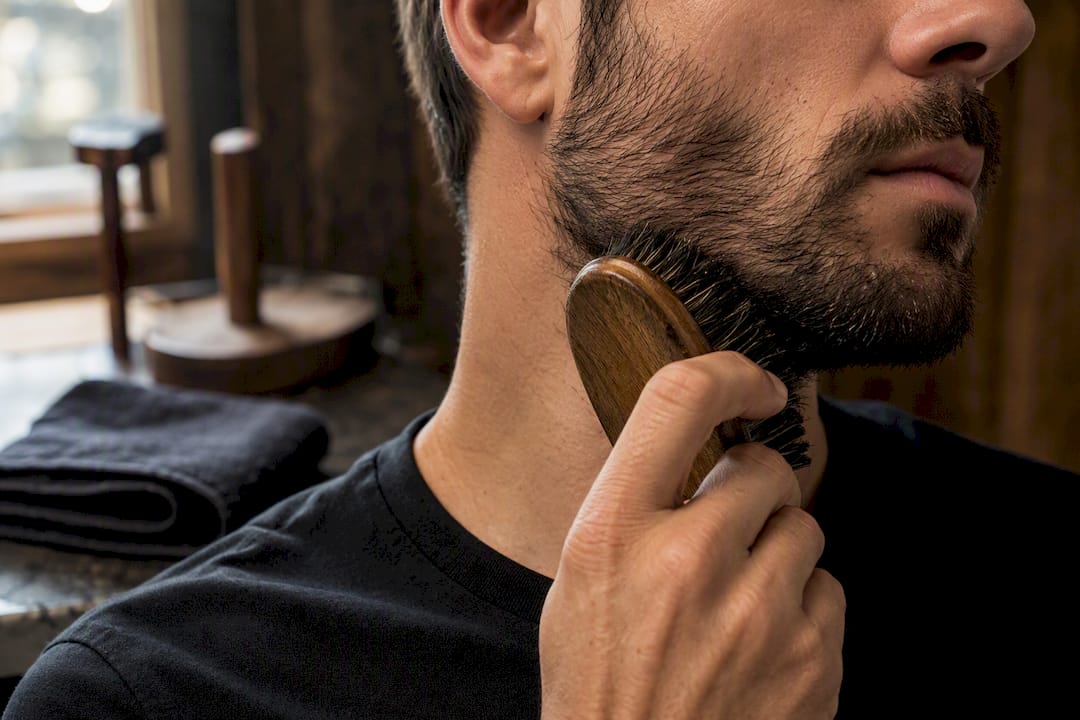
Beard balm or oil, applied strategically, matters as much for what it avoids as what it adds. A light matte balm on patchy zones creates surface uniformity and kills the shine that makes gaps catch light and stand out. Go heavier on product near thin spots, lighter everywhere else, rather than coating the whole beard evenly.
Beard fillers and pencils work well for one specific job: covering isolated bare patches on cheeks or along the jawline for a single event or photo. Match the pigment to your natural color within one shade, apply in short strokes following hair direction, and expect to reapply if you sweat or touch your face. This is a daily-maintenance product, not a set-and-forget fix.
Temporary tint helps most when your beard is graying unevenly or when lighter vellus hairs are washing out your color in photos. Apply with a small brush in thin, even coats. Uneven application is the number one mistake, since a blotchy tint job draws more attention than the patch you were trying to hide.
Fading and tapering is the technique with the most staying power. Blending a weak zone into a stronger one with a gradual gradient reframes it as a design choice instead of a flaw. This is the exact logic behind the shift toward precision fades and sharp borders in modern beard styling: shorter, more deliberate shaping reads as intentional in a way that longer, uneven growth never does.
Pro Tip: Groom for how your beard looks from three feet away in normal light, not two inches away in a magnifying mirror. A patch invisible at conversational distance rarely needs aggressive correction.
Can You Actually Grow More Density? Minoxidil, Derma Rolling, and Realistic Timelines
If styling isn't enough and you want more actual hair, three options have real evidence behind them, and one deserves a doctor's visit before you try anything.
Minoxidil is the best-studied option. Expect fine vellus hairs within 4 to 8 weeks of consistent daily use, with more noticeable terminal hair growth typically showing up between three and six months. Results vary significantly between men, and stopping use generally reverses the gains, so treat it as an ongoing commitment rather than a one-time fix.
Derma rolling (microneedling) at a short 0.5mm to 1.0mm needle length, used once or twice a week, may improve minoxidil absorption for some men when paired together. Sterilize the roller before each use and stop if you see prolonged redness or irritation.
Beard transplants are a real option for men with permanently bare zones, but they're a surgical procedure with real cost and recovery time. Good candidates typically have healthy donor hair elsewhere on the scalp and realistic expectations about density rather than a promise of a fully uniform beard.
Genetics sets your ceiling. Nutrition, sleep, and exercise support whatever growth your genes allow, but they won't override a pattern set by your follicles.
- See a dermatologist if patchiness appears suddenly rather than gradually.
- See a dermatologist if you notice sharply defined bald circles, which can signal alopecia areata.
- See a dermatologist if patches come with redness, scaling, or itching, which points to a skin condition rather than ordinary sparse growth.
Barber-Backed Advice on Grooming Sparse Facial Hair
Getting a patchy beard to look sharp is mostly a matter of choosing the right length and defending clean borders, which is a skill any barber develops through repetition, not guesswork. The pattern holds across most chairs: heavy stubble and short, well-edged beards consistently outperform longer, looser styles on sparse growth, because shorter hair simply gives gaps less room to show.
Product choice reinforces that same logic. Feared Beard's beard oils and balms are formulated in small batches with natural ingredients, built to hydrate and add light hold without the clumping that heavier, waxier products cause on thin coverage. That non-clumping behavior matters more on a patchy beard than a full one, since clumped hair strands expose exactly the skin you're trying to cover.
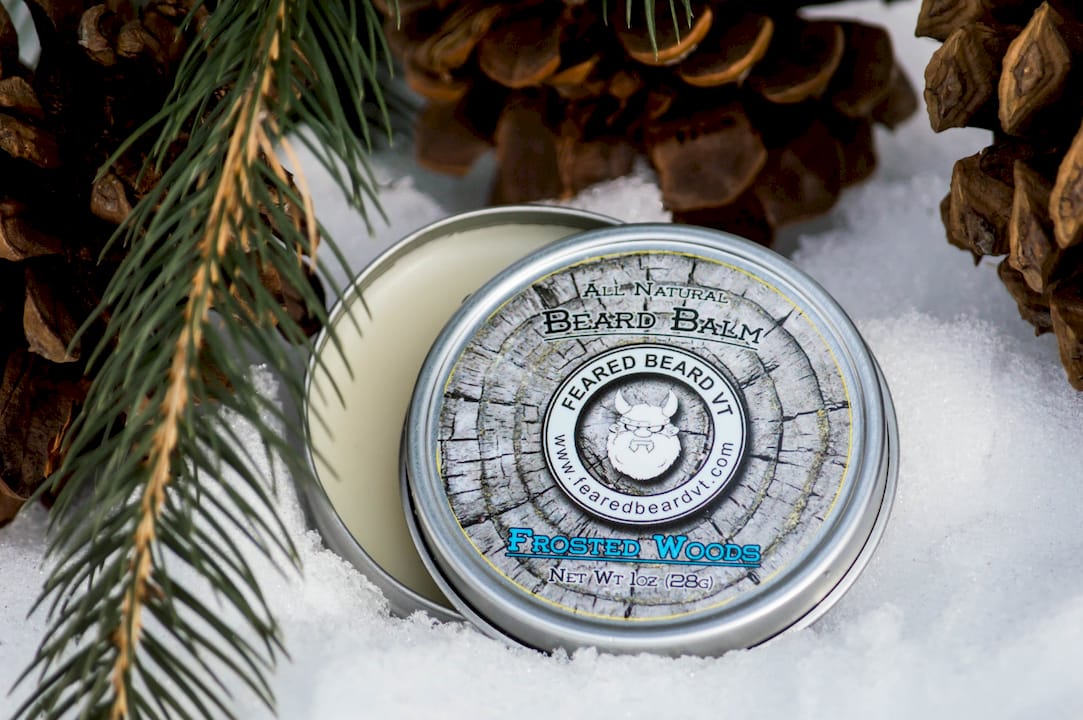
A practical example: a short beard in the 5 to 8mm range benefits from a balm with enough structure to hold shape, like the Frosted Woods Beard Balm, which adds texture and a light, non-greasy hold suited to that shorter length without weighing hair down into visible clumps.
Precision Beats Bulk: The Editorial Take
The old advice, grow it out and hope it fills in, is exactly backward for most patchy beards. Length adds contrast, and contrast is what makes a gap look like a gap. Cutting shorter is the fastest, cheapest, and most reliable fix available, and most men resist it because a longer beard feels like more progress.
What's overrated: filler pencils and heavy styling products as a long-term strategy. They work for a night out, not for a Tuesday. What's underrated: the neckline. A sloppy neckline makes a sharp style look careless in about three seconds, and it costs nothing to fix with a precision trimmer.
Prioritize in this order: length and borders first, a consistent lightweight product routine second, and growth treatments only if you've genuinely committed to the first two and still want more. Skipping straight to minoxidil while ignoring your trim cadence is like buying new tires for a car with a bent frame.
— Kyle
Which Feared Beard Products Match Your Routine
Once you've settled on a length, your product choice should follow the same logic: less is more, and lightweight products work best on sparse coverage.

If you went with stubble or designer stubble, a few drops of natural beard oil worked into the skin and shorter hairs handles hydration without adding weight or shine that highlights gaps. Shorter beards have less hair mass, so oil alone usually delivers enough softness and lay without needing extra hold.
If you landed on a short beard or goatee at 5 to 8mm, a light balm like the natural beard balm adds a bit more texture and shape control while staying formulated for sensitive skin, which matters if you're dealing with irritation from frequent trimming and edging. For a scent-forward option with the same non-clumping formula, the Citrus Orchard Beard Balm is worth trying.
Not sure which one fits your beard yet? That's normal, especially if you just changed lengths this week. Browse the full beard oil lineup, check the ingredients page to see exactly what's going on your skin, and pick the format that matches the length you settled on above. Every product is small-batch and made with natural ingredients, so you're not layering synthetic wax onto hair that's already working hard to look full.
Sources
- How to Fix a Patchy Beard: Proven Methods That Actually Work (2026)
- Patchy Beard Causes & Most Effective Treatments
- 28 Patchy Beard Styles That Actually Work (2026)
- How to Fix a Patchy Beard — Wahl Expert Advice