
Short beard care comes down to four moves: keep the skin underneath hydrated, apply a light oil daily, brush a few seconds to set direction, and trim on a tight schedule so the shape never drifts. Skip the heavy conditioners and the daily deep-clean — a short beard fails from over-handling far more often than from neglect.
TL;DR:
- Keeping the skin underneath hydrated and applying lightweight oil daily is crucial, while heavy conditioners and deep cleans are unnecessary at short lengths.
- Consistent, short routines—such as rinsing, patting dry, oil application, and brushing—are more effective than complex, sporadic rituals.
- Trimming should be done every 2 to 5 days with dry hair, focusing on precise neckline and cheek line shaping to maintain a sharp, natural look.
- Adjust product use seasonally, increasing moisture in winter and opting for lighter, non-greasy formulas in summer to prevent dryness and excess oil.
- Address patchiness and uneven growth with regular brushing, careful trimming, and patience, as growth cycles can fill in sparse areas over several weeks.
Table of Contents
- What Is Short Beard Care, Exactly?
- Quick 60 to 90 Second Daily Routine You Can Repeat
- Tools and Product Types That Actually Move the Needle for Short Beards
- Step-by-Step: Daily Maintenance and the Weekly Reset
- How Do You Stop Short Beard Itch and Flakes?
- Precise Trimming and Shaping: Neckline, Cheek Lines, and Blending
- Common Mistakes and How to Fix Them Fast
- How Do You Manage Uneven or Patchy Beard Growth?
- Seasonal Care: Adjusting for Winter and Summer
- Choosing Products by Skin and Hair Type
- Keeping Your Beard Fresh and Odor-Free All Day
- A Note From Kyle
- Start Here: Pick One Feared Beard Product to Fix Itch and Dryness
- Sources
What Is Short Beard Care, Exactly?
Short beard care is a skin-first maintenance phase, not a styling project. At stubble-to-short lengths, the follicle and the skin beneath it do most of the work that a longer beard's hair fibers would otherwise handle, so the routine has to protect that skin while training the hair to lie in one direction. Master barber David Connor frames it as a precision phase where product choice and neckline placement matter more than volume or shape.
That distinction changes what you buy and how often you use it. A short beard doesn't need the same weekly deep-conditioning treatment a six-month beard does, and IronMane Grooming points out that heavy products at this stage often do more harm than good, clogging follicles that are still adjusting. The goal for the next 60 days is simple: hydrate the skin, keep the hair trained, and trim before it gets unruly.
Quick 60 to 90 Second Daily Routine You Can Repeat
You don't need a ten-step ritual for a short beard. Four steps, done consistently, beat any elaborate routine done sporadically.
- Rinse or wipe down your face and beard with lukewarm water, or a damp cloth if you're skipping a shower.
- Pat dry with a towel, leaving the skin slightly damp rather than bone dry.
- Massage in 2 to 3 drops of beard oil, working it into the skin at the roots, not just over the surface hair.
- Finger-comb or brush for a few seconds to train hairs in one direction and distribute the oil evenly.
If your stubble is under a week old, a lightweight, fragrance-free moisturizer can outperform oil, since it hydrates without leaving a greasy film on hair that's barely there yet. Once you're past that early stage and into a fuller short beard, oil takes over as the better daily pick.
Do this daily check every morning, then set aside two minutes once a week for a closer look at symmetry, patchy spots, and any dry patches you missed.
Tools and Product Types That Actually Move the Needle for Short Beards
You need less gear than most product pages suggest. For a short beard, four tools cover nearly everything:
- A trimmer with multiple guard lengths for the bulk of the beard.
- A detail trimmer for cheek lines and the neckline.
- Small, sharp scissors for stray hairs and precision touch-ups.
- A soft brush or comb to train direction and check for missed spots.
Product-wise, keep it lean. A lightweight beard oil handles daily hydration and softening. A gentle beard wash, used two to three times a week, keeps things clean without stripping natural oils. Save balm for beards on the longer end of "short," where you need a little hold and extra moisture retention.
What to avoid: daily beard-specific shampoo (it's overkill and drying), heavy conditioners meant for longer beards, and waxes, which tend to clog pores at short lengths rather than shape anything meaningfully.
Pro Tip: Use a soft boar-bristle or synthetic brush, not just your fingers, to train short hairs downward. GQ's grooming advice notes a brush distributes oil more evenly than fingertips alone, without over-exfoliating sensitive skin.
Step-by-Step: Daily Maintenance and the Weekly Reset
Your beard needs two different rhythms working together: a fast daily touch and a more deliberate weekly reset.
Daily (30 to 90 seconds):
- Cleanse or rinse, then pat mostly dry.
- Apply 2 to 3 drops of oil directly to the skin.
- Brush or finger-comb to set the direction.
Weekly reset:
- Trim fully dry, using a consistent guard length across the whole beard.
- Re-establish the neckline and cheek lines with a detail trimmer.
- Use small scissors for any stray hairs the trimmer missed.
As for cadence, trimming every 2 to 5 days keeps the shape sharp without letting the beard get away from you, with a full reset once a week to catch anything the quick trims missed. Trim dry, always. Wet hair shrinks as it dries, and that's how a clean trim turns into an uneven one by morning.
How Do You Stop Short Beard Itch and Flakes?
At short lengths, the skin underneath is doing more exposed work than it will once the beard fills in, which is exactly why itch and flaking show up so fast in the first few weeks. IronMane Grooming recommends massaging oil directly into the follicles while the skin is still damp from cleansing, since that's when absorption is best.
Keep cleansing to two or three times a week; daily washing is one of the most common causes of chronic short-beard itch because it strips the skin's natural oils faster than they can replenish. A gentle exfoliation once a week helps clear dead skin and ingrown hairs before they turn into bumps.
- Cleanse 2 to 3 times weekly, no more.
- Exfoliate gently once a week.
- Swap to a non-comedogenic, lightweight moisturizer if oil alone isn't calming redness.
If irritation turns into persistent inflammation, pus-filled bumps, or anything that doesn't improve within a week or two of adjusting your routine, that's a signal to see a dermatologist rather than push through with more product.
Precise Trimming and Shaping: Neckline, Cheek Lines, and Blending
The neckline is where most short beards go wrong, and it's the easiest fix once you know the rule.
- Find your line: place two fingers above your Adam's apple and let that mark the highest point of your neckline curve.
- Curve, don't outline: follow a slight U-shape rather than a straight line at the jaw.
- Trim cheek lines subtly, following your natural hairline instead of carving a hard edge.
- Blend with a taper, using a slightly longer guard as you move from cheek to neckline for a smoother transition.
Placing the neckline one to two fingers above the Adam's apple avoids the "fuzz down the throat" look and actually strengthens your jawline visually. Always trim dry. Wet hair changes length as it dries, and that's exactly how necklines end up too low without you noticing until the next morning.
Pro Tip: If you're unsure where your neckline should sit, tilt your head back slightly and look for the natural crease. That crease usually lines up almost exactly with the one-to-two-finger rule.
Common Mistakes and How to Fix Them Fast
Most short beard problems are self-inflicted and fixable within a day or two.
- Neckline too low: clean up everything below your one-to-two-finger line and blend with a slightly longer guard so it doesn't look abrupt.
- Over-washing: cut back to a gentle wash two to three times a week and add an oil massage to recover lost moisture.
- Trimmed wet: re-trim dry with a guard one size longer than you'd normally use, since wet hair looks shorter than it is once dry.
- Heavy daily products causing breakouts: switch to a non-comedogenic, lightweight formula, especially if your skin runs sensitive or oily.
How Do You Manage Uneven or Patchy Beard Growth?
Patchiness at short lengths is almost always more visible than it will be later, simply because there's less hair to disguise the gaps. The instinct to grow everything out evenly before trimming usually backfires, since uneven patches just get longer and more noticeable the longer you wait.
Work with the pattern you have instead of fighting it. If your cheeks grow in thinner than your chin and jaw, keep the length shorter and more uniform across the whole beard rather than letting the fuller areas grow longer while the patchy spots lag behind. A slightly shorter, evenly trimmed beard reads as intentional. A longer beard with visible gaps reads as unfinished.
Brushing daily does more here than most guys expect. Training hair to lie flat and in one direction makes thin patches look fuller because the surrounding hair covers more surface area. A trimmer set one guard length shorter over sparse zones, blended into the fuller sections, also helps disguise uneven density without an obvious line where the two textures meet.
Give any new growth pattern at least three to four weeks before judging it. Hair growth cycles vary across the face, and cheek or jawline patches that look permanent at three weeks often fill in meaningfully by week six or eight. If patchiness persists well beyond that window and looks like distinct bald spots rather than just slower growth, it's worth asking a dermatologist whether something beyond normal variation is going on.
Seasonal Care: Adjusting for Winter and Summer
Your beard's needs shift with the weather, and short beards feel the shift faster than longer ones because there's less hair mass to buffer the skin.
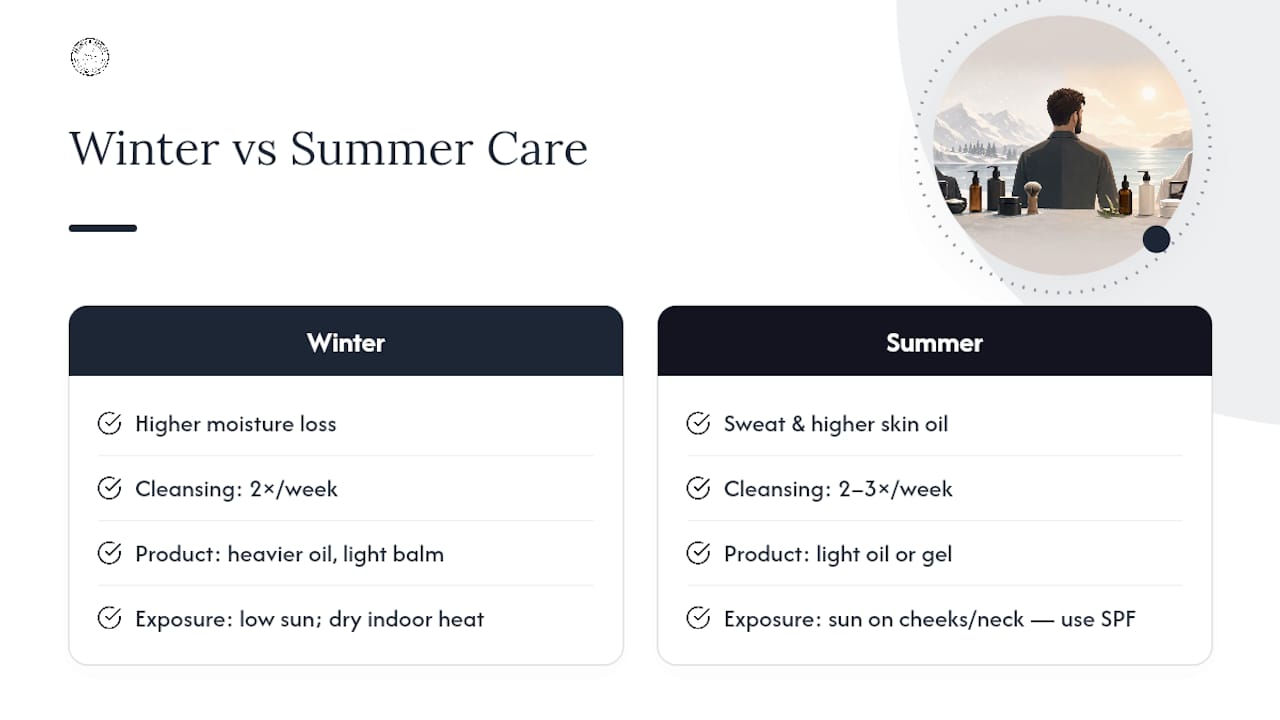
In winter, indoor heating and cold, dry outdoor air both pull moisture from your skin, which means the itch and flaking that show up in the first weeks of a new beard often get worse in January and February rather than better. Bump up your oil slightly, maybe an extra drop, and consider a light balm if your beard has enough length to hold it, since balm's added lock-in properties help counter what dry heat strips out.
Summer brings the opposite problem: sweat, sunscreen, and higher oil production from your own skin. Cleansing frequency can shift toward the upper end of that two-to-three-times-a-week range, and a lighter, non-greasy oil or gel-based moisturizer usually feels better than a thicker balm when temperatures climb. Sun exposure on the skin under a short beard is also easy to forget about, so a lightweight sunscreen on exposed cheek and neck skin isn't a bad habit to build.
Transitional months, spring and fall, are when most guys get lazy about adjusting anything at all. Pay attention to how your skin feels rather than sticking to a rigid seasonal calendar. If it feels tight or flaky, add moisture. If it feels oily or congested, ease back.
Choosing Products by Skin and Hair Type
Not every short beard needs the same product, and matching your formula to your skin type solves more itch and irritation problems than switching brands ever will.
Sensitive or acne-prone skin does best with unscented, non-comedogenic formulas. Lightweight carrier oils like jojoba and apricot kernel sit closer to your skin's natural oil composition, which means less risk of clogged pores or breakouts than heavier, wax-based products.
Dry or flaky skin benefits from a slightly richer oil or a light balm once the beard has enough length to hold it, applied right after cleansing while skin is still a little damp so it locks in moisture rather than sitting on top.
Oily skin usually does better with a lighter oil applied in smaller amounts, since oily skin already produces plenty of its own sebum and doesn't need much reinforcement.
Coarse or wiry hair softens faster with consistent daily oil, since the goal is conditioning the hair shaft as much as the skin underneath.
Fine or thin hair doesn't need much product at all. Overloading fine hair with oil or balm can weigh it down and make already-sparse areas look flatter and thinner rather than fuller.
If you're not sure which category you fall into, start with an unscented, lightweight oil. It's the safest baseline for the widest range of skin types and rarely causes a reaction, even on skin that hasn't been tested with a beard-specific product before.
Keeping Your Beard Fresh and Odor-Free All Day
Beard odor almost always comes from trapped food particles, sweat, or product buildup, not from the hair itself. A short beard is actually easier to keep odor-free than a long one, since there's less surface area for debris to hide in, but it still needs a little attention if you want it smelling clean by evening.
Rinse your beard after meals when you can, even a quick water rinse without soap removes most food residue before it has a chance to sit and develop a smell. If a full rinse isn't practical, a quick pass with a damp cloth works almost as well.
Don't overcompensate with heavy, long-lasting fragrance oils applied in large amounts. A little goes further than you'd think, and reapplying throughout the day usually creates a muddled scent rather than a fresher one. One application in the morning, done right after cleansing, tends to hold up better than several light touch-ups.
Keep your pillowcase and any towels you dry your face with reasonably clean, since a beard that smells fine in the morning can pick up stale odors from fabric contact by evening. It's a small detail, but it's one of the more overlooked reasons a beard that was fresh at 8 AM smells off by dinner.
A Note From Kyle
Most short beard advice treats it like a scaled-down version of a full beard routine, and that's backwards. The skin does more of the work at this stage, which is exactly why the oils and balms are built around small-batch, all-natural ingredients rather than the heavier synthetic fillers common in mass-market products. If you've struggled with itch or flaking on a short beard before, the product might be the actual problem, not your skin.
— Kyle
Start Here: Pick One Feared Beard Product to Fix Itch and Dryness
If you're only going to buy one thing for a short beard, consider a light beard oil. It hydrates the skin directly, softens hair fibers without weighing them down, and works whether you're at day three of stubble or eight weeks into a fuller short beard.

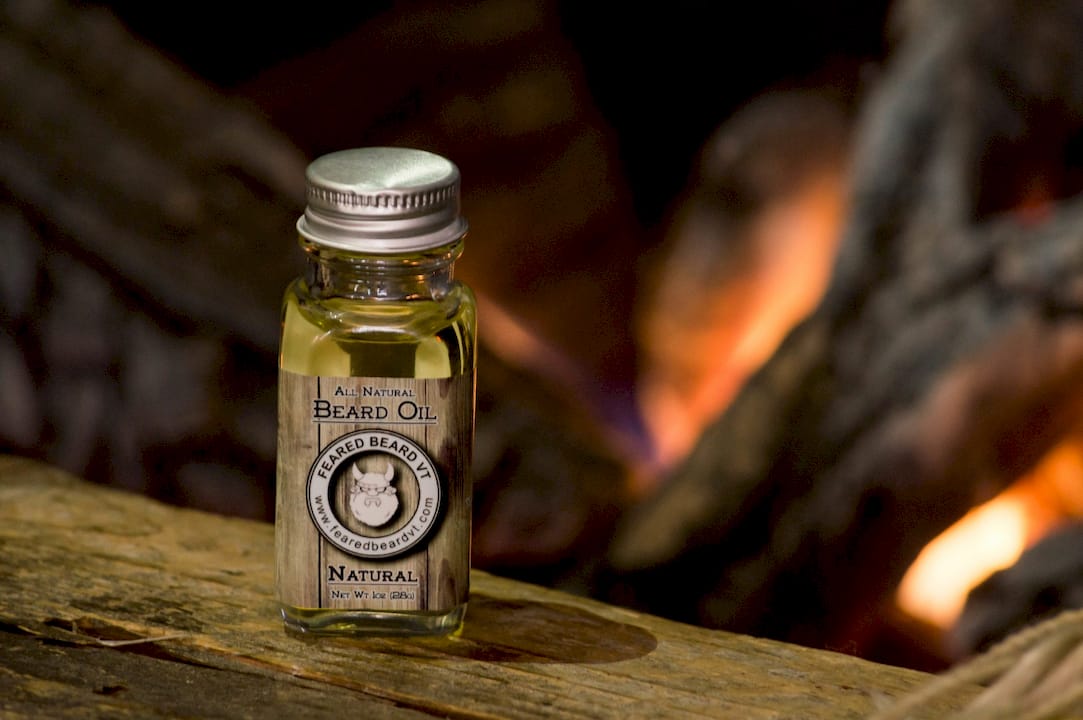
The Natural Beard Oil is built for exactly this stage: small-batch, all-natural ingredients formulated to absorb into the skin rather than sit on top of it. Massage 2 to 3 drops into damp skin each morning, focusing on the roots rather than just the visible hair. If you run sensitive or prefer no fragrance at all, look for the unscented option on the same beard oils page before choosing a scented variety. Once your beard has grown past the earliest short-length stage and you want a bit more hold or richness, the Natural Beard Balm is the next logical step up. Pick one product, use it consistently for two to three weeks, and judge from there.
Sources
- Short Beard Styles: How to Maintain a Tidy Beard | GQ
- Beard Care Routine for Short Beards: The Foundation Phase | IronMane Grooming
- How to Maintain a Short Beard Like a Pro | Beard Beasts