
Beard balm is a simple product made with wax for hold, butter for body and conditioning, carrier oil for moisture, and optional fragrance for scent. Read the ingredient label to see which ingredients you are buying, and treat "Fragrance" as the line to watch if your skin is reactive.
TL;DR:
- Long, coarse beards in winter usually need more wax and richer butter, while short beards or acne prone skin suit lighter oils and less butter.
- Jojoba and argan can soften hair and reduce brittleness, but clinical support for oils accelerating beard growth remains lacking, so choose them for conditioning.
- Labels may list fragrance without naming its components, and hypoallergenic has no legal definition, so reactive skin calls for an unscented balm and a patch test.
- Make a 30 to 60 g test batch, change one ingredient at a time, and record softness, hold, itching, or breakouts before adjusting the formula.
- The first ingredients on a label make up most of the balm, and their order can reveal whether the formula emphasizes oil, butter, or wax.
Table of Contents
- What are the main categories of beard balm ingredients?
- How do these ingredients split hold, conditioning and skin benefits?
- What are simple beard balm recipes and ratios for beginners?
- Why does fragrance deserve extra care in a beard balm?
- How do you choose or adjust a formula for your own beard?
- How does our small-batch approach shape ingredient choices?
- Are synthetic or natural ingredients better in beard balm?
- What should you look for in ingredient sourcing and quality?
- What matters most when you make or buy a balm?
- Skip the mixing with natural balms made by our team
- FAQ
- Sources
What are the main categories of beard balm ingredients?
Every balm you pick up, store-bought or homemade, draws from the same short list of ingredient classes.
- Waxes: beeswax is the traditional choice. Candelilla and carnauba are plant-based alternatives, and the harder the wax, the firmer the balm and the stronger the hold.
- Butters: shea, mango and cocoa add emollience and a softer skin feel. Each melts a little differently, so sheaf eels creamy, mango feels lighter, and cocoa leans firm.
- Carrier oils: jojoba, argan, coconut, castor and sweet almond condition the hair and skin. They differ in how fast they absorb and how heavy they feel, and coconut oil in particular is a common concern for people prone to clogged pores.
- Additives: vitamin E acts as an antioxidant that helps the oils stay fresh. Specialty oils such as broccoli seed or hemp seed can add shine or change how the balm glides on.
Think of it as a trade-off table in your head. Firmer waxes give you control but can feel stiff. Richer butters feel luxurious but can weigh down fine hair. Lighter oils absorb fast but may not last through a dry Vermont winter.
How do these ingredients split hold, conditioning and skin benefits?
Hold comes from the wax, with a little help from firmer butters. Conditioning comes from carrier oils and softer butters. The skin under your beard benefits from both, because moisturized skin is less itchy and flaky.
One expectation worth resetting: a dermatology review of plant-based cosmetic oils found that oils like jojoba and argan improve hair suppleness and reduce brittleness, but strong clinical support for oils making a beard grow faster is lacking. Conditioning protects the hair and skin you already have. It is not a growth treatment.
Use these signs to diagnose a balm that is off:
- Greasy, shiny sheen that never absorbs: too much oil relative to wax and butter.
- Dry, brittle, straw-like hairs: too little conditioning, so add more butter or a nourishing oil.
- Beard will not stay in shape: too little wax, or a wax that is too soft for your hair length.
- Flaking or itching underneath: the oil may be too heavy for your skin, or a fragrance may be irritating it.
Pro Tip: Change one ingredient at a time when you adjust a recipe. If you change the wax and the oil together, you will not know which change fixed the problem.
What are simple beard balm recipes and ratios for beginners?
Start with proportions by weight, written as wax to butter to oil. These are starting templates, not laboratory standards, and you will likely tweak them.
- Soft hold: a light conditioning balm for short or fine beards.
- Medium hold: a creamier balm with moderate shaping power.
- Firm hold: a stiffer balm for longer beards that need real control.
For a small batch, here is how that looks in two sample recipes. The first is a medium balm: beeswax, shea butter and jojoba oil. The second is a plant-based version: candelilla wax, mango butter and argan oil. Add a few drops of vitamin E if you like, and scent only after the mixture has cooled slightly.
A few technique notes keep the texture smooth:
- Melt the wax first, since it needs the most heat, then add butter, then oil.
- Use a gentle double boiler rather than direct heat so the oils do not scorch.
- Cool the mixture steadily at room temperature. Rapid chilling in the freezer is the usual cause of a grainy texture, especially with shea.
If you want to see how hold behaves in practice, our post on beard balm for styling walks through what to expect as your beard grows longer.
Why does fragrance deserve extra care in a beard balm?
Fragrance is the one ingredient category where the label can tell you the least. Under FDA guidance on fragrances in cosmetics, fragrance ingredients may be listed simply as "Fragrance," and there is no legal definition for "hypoallergenic." So a balm advertised as gentle can still contain scent components you cannot see on the panel.
Many fragrance components and essential oils can contain sensitizing compounds, according to the FDA's allergen overview. Citrus oils, cinnamon, clove and lavender are common culprits for people with sensitive skin. Safer habits include:
- Patch test any new balm on your inner forearm or behind your ear before using it on your face.
- Dilute essential oils well, keeping the scent a small fraction of the batch.
- Choose unscented or a single-note scent if your skin is reactive.
- Read the ingredient list instead of trusting front-label claims.
The best way to avoid a reaction is to know what you are sensitive to and read the ingredient panel carefully. For a deeper look at the "parfum" red flag, see our guide to beard oil ingredients. If you want another angle on when to skip scent altogether, this article on avoiding fragrance in skincare is a useful read.
How do you choose or adjust a formula for your own beard?
Start by sizing up your situation. Beard length, coarseness, skin type, desired hold, scent preference and season all push the formula in a different direction. A coarse, long beard in winter usually wants more wax and richer butter, while a short beard on oily or acne-prone skin does better with light oils and less butter.
Then run a short trial:
- Make a small 30 to 60 g test batch instead of a big one.
- Patch test it before use.
- Use it regularly for a while.
- Note how soft the hair feels, how well it holds, and any itch or breakouts.
- Adjust one variable and repeat.
Your adjustment rules are straightforward. More wax gives firmer hold, and more oil gives a softer feel. If clogged pores are a worry, swap heavier oils like coconut for lighter ones like jojoba. If your skin is sensitive, drop allergenic essential oils first, before changing anything else.
Keep notes. A quick line per batch about ratios and results saves you from repeating a recipe that did not work.
How does our small-batch approach shape ingredient choices?
We make our balms by hand in small batches, and we describe our formulas as natural. That means choosing ingredients from the categories above for a reason: a wax for dependable hold, butters for body, and carrier oils for conditioning.
We would rather list a short, recognizable ingredient panel than hide behind a long one. If you want exact formulations, our product pages list what is in each balm, and our ingredients page explains how we think about each one.
If you would rather skip the mixing and still follow these principles, our Beard Balms are made that way.
Are synthetic or natural ingredients better in beard balm?
Neither label guarantees a good balm or a safe one. "Natural" means the ingredient comes from a plant, mineral or animal source, while "synthetic" means it was made or heavily modified in a lab. Both can irritate skin, and both can work well.
Natural ingredients such as beeswax, shea and jojoba oil are familiar, easy to identify on a label and straightforward for home makers to source. Their downsides are real, though: natural oils can go rancid, scents vary from batch to batch, and plant extracts can sensitize some people. Fragrance is the clearest example of why "natural" is not a safety claim, since essential oils are on the allergen conversation as much as perfume blends are.
Synthetic ingredients can add consistency. A lab-made fragrance smells the same every time, and some preservatives and textures are engineered for stability. The tradeoff is that a blend listed only as "Fragrance" hides what is inside, and petroleum-derived fillers give body without the conditioning that butters and oils provide.
Our own approach is all-natural, because we want ingredients you can recognize, pronounce and trace. If you prefer synthetics, the useful questions are the same ones to ask of any balm. What is each ingredient doing, can the maker tell you what is in the fragrance, and does your skin tolerate it after a patch test? Judge by what is on the label and how your skin responses, not by the marketing word on the front.

What should you look for in ingredient sourcing and quality?
Quality starts with freshness and honesty on the label. FDA labeling rules require ingredient declarations in descending order of predominance, with limited exceptions, so the first few items on the panel are the bulk of the product. If a balm lists oil, butter and wax in that rough order, the ratios match a soft or medium formula.
Beyond the label, a few practical checks separate good ingredients from mediocre ones:
- Unrefined, cold-pressed oils retain more of their natural character than heavily processed ones, though they also smell stronger.
- Fresh stock matters. Oils and butters go stale, so buy from sellers who turn inventory quickly and store ingredients in a cool, dark place.
- Know the grade. Cosmetic-grade, food-grade and fragrance-grade are not interchangeable, and essential oils meant for diffusing are not the same as those blended for skin.
- Traceable origin helps. A maker who can tell you where the beeswax or shea comes from is usually a maker paying attention.
For home makers, buy small quantities from reputable suppliers and label every container with the purchase date. For shoppers, a short, readable ingredient list from a brand willing to answer questions about it is a better signal than a long list of claims. We stay small-batch partly for this reason.
What matters most when you make or buy a balm?
My take is that most people overthink the exotic stuff and underthink the basics. The ingredient everyone hunts for, the miracle oil that supposedly grows a fuller beard, is the one the evidence supports least. What the evidence does support is dull and useful: condition the hair, moisturize the skin, and pick a wax that holds your style.
So here is the order I would work in. First, get the ratio right for your beard length and the season, because that fixes most complaints about hold and greasiness. Second, protect your skin, which means picking a scent level you can tolerate and patch testing before you commit. Third, shop and source like you would for food: short ingredient lists, fresh stock, and makers who answer questions.
What I would stop worrying about is whether every ingredient sounds natural or scientific. The words on the front of the tin matter far less than the panel on the back and how your face feels after using it.
— Kyle
Skip the mixing with natural balms made by our team
If you like the idea of these ingredient principles but not the melting pot, we have you covered. We offer options for sensitive skin.
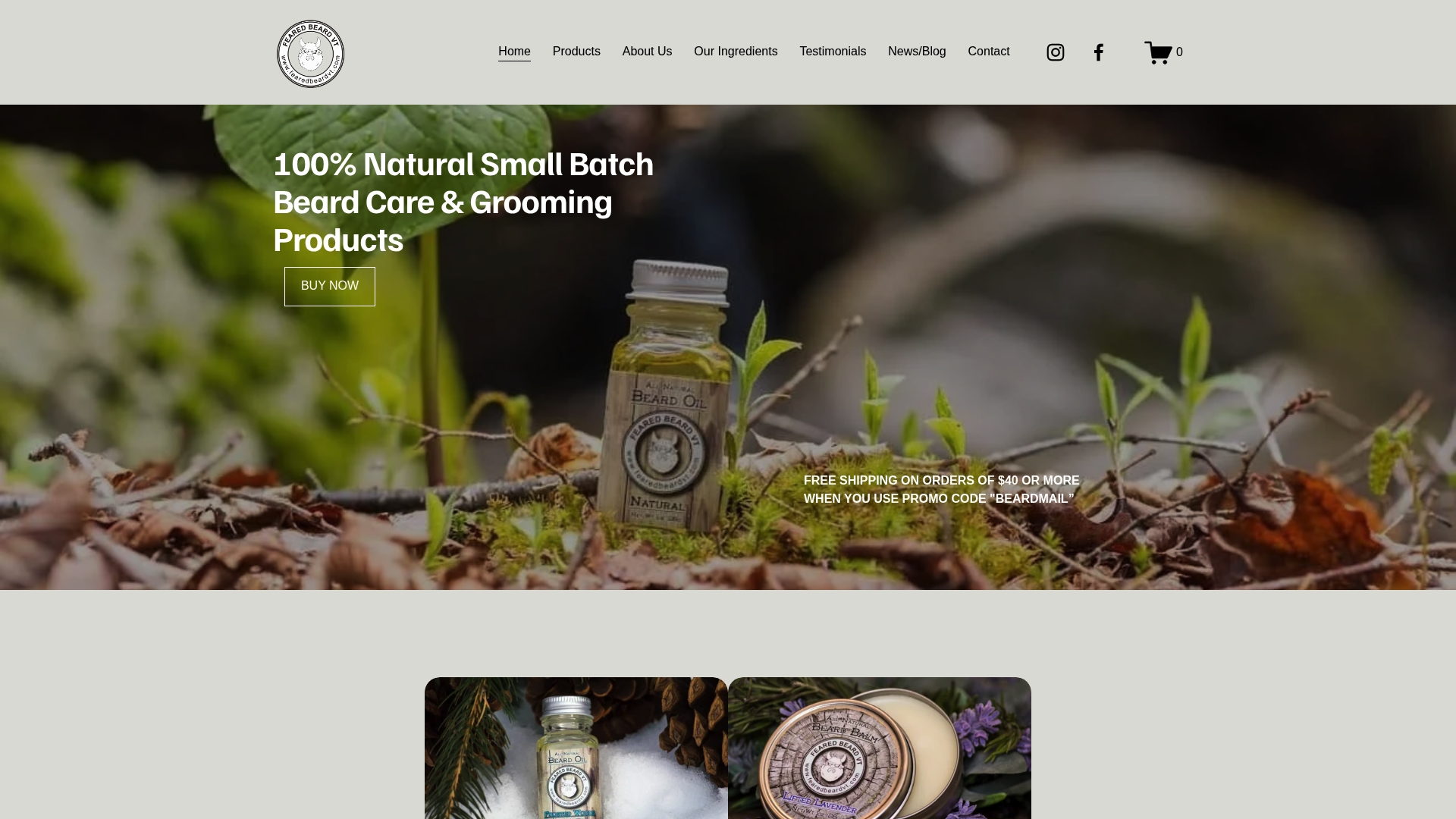
- Our natural beard balm is formulated for sensitive skin.
- Our starter kit is an easy way to try our products.
- Every product page lists its ingredients, and you can reach out if you want more detail on any of them.
Browse everything we make at Fearedbeard, and pick the balm that fits your beard.
FAQ
Is beard balm the same as beard cream?
No. Beard balm is built on wax, butter and oil, so it gives more hold and a more styled finish. Beard cream is generally lighter and more lotion-like, aimed at softness and moisture with less shaping power.
What are the best oils for conditioning a beard?
Jojoba and argan are popular carrier oils because they improve softness and reduce brittleness. A dermatology review notes that strong clinical support for oils speeding beard growth is lacking, so choose oils for conditioning rather than growth.
How do you make your own beard balm?
Melt a wax, then a butter, then a carrier oil in a double boiler, using a suitable wax-to-butter-to-oil ratio for medium hold. Cool it steadily and add scent only after it cools slightly. Patch test before using it on your face.
Is petroleum jelly okay for a beard?
It can add shine and some hold, but it sits on the surface and does not condition hair the way butters and plant oils do. If your goal is softness and healthier-feeling skin, a wax, butter and oil balm is the better fit.
Sources
- Fragrances in Cosmetics | FDA
- A Comprehensive Review of Plant-Based Cosmetic Oils (Virgin Coconut Oil, Olive Oil, Argan Oil, and Jojoba Oil): Chemical and Biological Properties and Their Cosmeceutical Applications