
Eco-friendly grooming for a beard comes down to three things: short ingredient lists you can read, products made from renewable plant oils and butters, and a routine with fewer bottles, fewer throwaway tools and less guesswork. That is how we make beard oils, balms, soap and lip balm at Feared Beard VT: small-batch, 100% natural products, formulated and packed by hand. This guide shows you how to judge any grooming product the same way.
TL;DR
- Judge a product by its ingredient list, not the front label. The FDA has never defined "natural" for cosmetics, so the word alone proves nothing.
- Plant oils such as jojoba and argan, plus butters like shea and cocoa butter, are the backbone of a simple, renewable beard routine.
- A lower-waste routine needs only a few pieces: a gentle wash, a conditioning oil or balm, a brush and a handful of reusable tools.
- Fragrance listed as "parfum" hides its ingredients. Unscented options are the simple choice for sensitive skin.
- For gifts, look for a starter set that covers wash, condition and style, so the recipient gets a whole routine instead of one bottle.
Table of Contents
- What eco-friendly grooming means for a beard
- Ingredients: where eco-friendly and skin-friendly overlap
- How to read a "natural" claim
- Packaging and tools: where the waste really is
- A lower-waste beard routine in four steps
- Perspective
- What to look for in an eco-friendly grooming gift set
- Where to start with Feared Beard
- FAQ
- Sources
What eco-friendly grooming means for a beard
Search this phrase and you will mostly find lists of toothpaste, deodorant and shampoo, and a lot of results about dogs. A beard sits in a narrower lane. It is hair with skin underneath, so the product has to do two jobs: keep the skin from drying out and tame the hair. Eco-friendly grooming for a beard means doing both with ingredients that are renewable, and with as little packaging and as few disposable items as you can manage.
That breaks into two questions you can ask of any product:
- What is in it? Are the ingredients things you recognize, and do they come from plants rather than petroleum?
- What happens to it afterward? Does the formula rinse off into water without lingering, and what do you throw away when the bottle is empty?
The Environmental Working Group (EWG), a US nonprofit that scores personal care products, makes a related point about beards in particular. It says beard care goes beyond moisturizing and shaping, and that regular cleaning is a good place to start if itch develops. Its Skin Deep database rates products from 1 (lowest hazard) to 10 (highest), which gives you a free way to compare what you already own.
Ingredients: where eco-friendly and skin-friendly overlap
The good news for beard owners is that the ingredients that are easiest on the planet are often the ones beards respond to best.
Plant oils and butters
A beard oil needs a carrier: a plain oil that spreads thinly, softens the hair and moisturizes the skin beneath. Jojoba, argan and hemp seed oil are common plant-based choices. They come from crops rather than from refining crude oil, and they are the kind of ingredient you can name from a label. If you want to see how a single oil behaves in a beard, we wrote up what jojoba oil does for beard itch and how hemp seed oil softens a beard.
Balms add butters and waxes for hold and conditioning. Shea butter and cocoa butter do the same job a petroleum-based pomade would, from a plant source. Our beard balms are built on that idea.
Washing without stripping
Green Matters, a sustainability publication, explains that ordinary hand soap or body wash strips a beard of its natural oils and dries it out. That is why beard-specific washes use gentler ingredients such as soybean oil, cocoa butter and argan oil. The same piece recommends drying the beard right after washing, then brushing it to stimulate circulation, prevent breakage and clear clogged follicles.
There is also a packaging angle. FashionBeans' sustainability editor recommends solid, "naked" formats such as shampoo bars in place of plastic bottles. A bar of handmade soap, like our soap and lip balm range, fits that approach. We explain what goes into the bar in our beard soap ingredients guide.

Palm oil and the ingredients behind the label
The same FashionBeans article points out that palm oil turns up in everyday personal care products because it is cheap and a good source of long-chain fatty acids for emulsions. It links palm oil to deforestation concerns, and its advice is to read grooming labels the way you read food labels. That is a habit worth adopting: if you cannot tell what an ingredient is, look it up before it goes on your face.
How to read a "natural" claim
The words on the front of a bottle are marketing. EWG notes that the FDA has never legally defined "natural" and has no regulations on its use in personal care. Terms like "nontoxic," "plant-based" and "free of" are in the same position. The label is where a claim gets tested. Here is a practical way to do it in a minute or two.
A five-point label check
- Read the ingredient list, not the front. Short is good. Every item should be something you can look up.
- Look at the first five ingredients. They make up most of the product. Plant oils and butters near the top are a good sign.
- Find the fragrance line. EWG's greenwashing guidance advises steering clear of the words "parfum" or "fragrance", because a single word can cover many undisclosed ingredients. Scents from named essential oils are easier to read. We go through this in our beard oil ingredients guide.
- Check the seal, if the product claims organic. Mayo Clinic Health System explains that the USDA Organic seal comes in two forms: "100 percent organic," and "Organic," meaning at least 95% organically produced ingredients. A product that claims organic without the official seal may not meet USDA standards.
- Be careful with "clinically proven." The term isn't regulated. A board-certified dermatologist quoted by Allure advises looking up the actual study, and a product-testing expert there suggests at least 30 participants as a sensible minimum.
You can also look up a product by name in EWG's free Skin Deep database to see its hazard score from 1 to 10 before you buy.
Worked example: two beard oils
Say you are comparing two 1 oz bottles. The first reads "natural beard oil" on the front. The back lists a plant oil, then "parfum," then several ingredients you cannot place. The second lists a handful of plant oils by name, with a scent from named essential oils or no scent at all. By the checks above, the second is easier to judge, easier to compare and easier to match to sensitive skin. Same size, same price range, very different transparency.

Packaging and tools: where the waste really is
Ingredients are half the story. The other half is what ends up in your bin.
- Glass versus plastic. FashionBeans notes that most plastics cannot be recycled more than once, and that recycling them takes more energy than recycling glass or aluminum. When you have a choice, pick the more recyclable material and use the bottle to the last drop.
- Fewer bottles. A solid soap bar replaces a plastic bottle of wash. A balm in a tin can replace a separate styling product. Each product you do not buy is waste you do not create.
- Durable tools. One of the pages ranking for this keyword argues that sustainable grooming starts with tools that outlast disposable ones: a good comb and a good brush, not a drawer of cheap replacements.
- Disposable razors. The FashionBeans piece recommends reusable steel razors over disposables. Cartridges that fuse steel, plastic and lubricating strips are hard to recycle.
Eco-friendly habits do not stop at the beard, either. If you are rethinking the whole bathroom shelf, this guide to eco-friendly oral care covers the same logic for your teeth.
A lower-waste beard routine in four steps
This routine uses few products and each one earns its place.
1. Wash with something made for beards
Wash two to three times a week, or more often if you work outdoors, and use a beard wash or a bar made for skin and facial hair rather than hand soap. Our handmade organic soap for men is one bar that does this job, and it removes the plastic bottle from the routine.
2. Dry and brush
Pat the beard dry right away, then brush. Green Matters says brushing stimulates circulation, prevents breakage and unclogs follicles. A wooden brush or comb is a tool you buy once.
3. Condition the skin and hair with oil
While the beard is still slightly damp, work in a few drops of beard oil, starting at the skin and finishing through the length. Our natural beard oil is made in small batches by hand, and the full range lives on the beard oils page. Oil is where scent choice matters most, so pick an unscented option if your skin is sensitive. We make unscented versions for that reason.
4. Style with a balm
A balm adds light hold and extra conditioning, which helps with flyaways and shaping. Warm a small amount between your palms, then work it through. Our all-natural beard balm is formulated for sensitive skin, and scented options like Frosted Woods and Citrus Orchard are there when you want a fragrance.
A small tin of lip balm rounds out the set, since a beard can leave the lips exposed to wind and cold.
Perspective
We started Feared Beard because dry, unruly beards are a problem a short list of good ingredients can solve. Most of what a beard needs is simple: a clean base, a plant oil that softens, and a balm that holds. When a formula needs a long list of things you cannot pronounce to do that, we think the formula is the problem.
That is why we make our products in small batches, by hand, with natural ingredients, and why we offer unscented versions for people with sensitive skin. A small batch means we handle every product ourselves, and it keeps the range focused on what works.
Eco-friendly, to us, is not a label on the front. It is a habit: fewer products, simpler formulas, and things you use up instead of throw away. Our customers come back to the same oil and the same balm, and that, more than any slogan, is how we know the routine holds up.
Kyle
What to look for in an eco-friendly grooming gift set
A good gift set is a routine in a box, not a pile of extras. When you shop for one, check these things:
- It covers the basics. Look for a wash or soap, an oil or balm, and a tool that lasts. That gives the recipient a full routine.
- It has a scent plan. Scent is personal. If you do not know the recipient's taste, unscented options are the safest pick, and they suit sensitive skin.
- The ingredient lists are readable. Apply the same label check above to every item in the box. If the gift is a skin product, a short, clear list matters even more.
- It suits a beginner. A starter set removes the guesswork for someone who has never used oil or balm.
Our Starter Beard Care Kit is built for that first-routine case, and the full range of gifts and sets is on the shop. If you would rather let the recipient choose their scent, a gift card starts at $25.
Where to start with Feared Beard
If you want to move to a simpler, plant-based routine, begin with the two products that do the most: a beard oil and a beard balm. Both are 100% natural, made by hand in small batches, and available in scented and unscented options. Browse the full shop and pick the scent that suits you, or choose the Starter Beard Care Kit if you want everything for a first routine in one order.
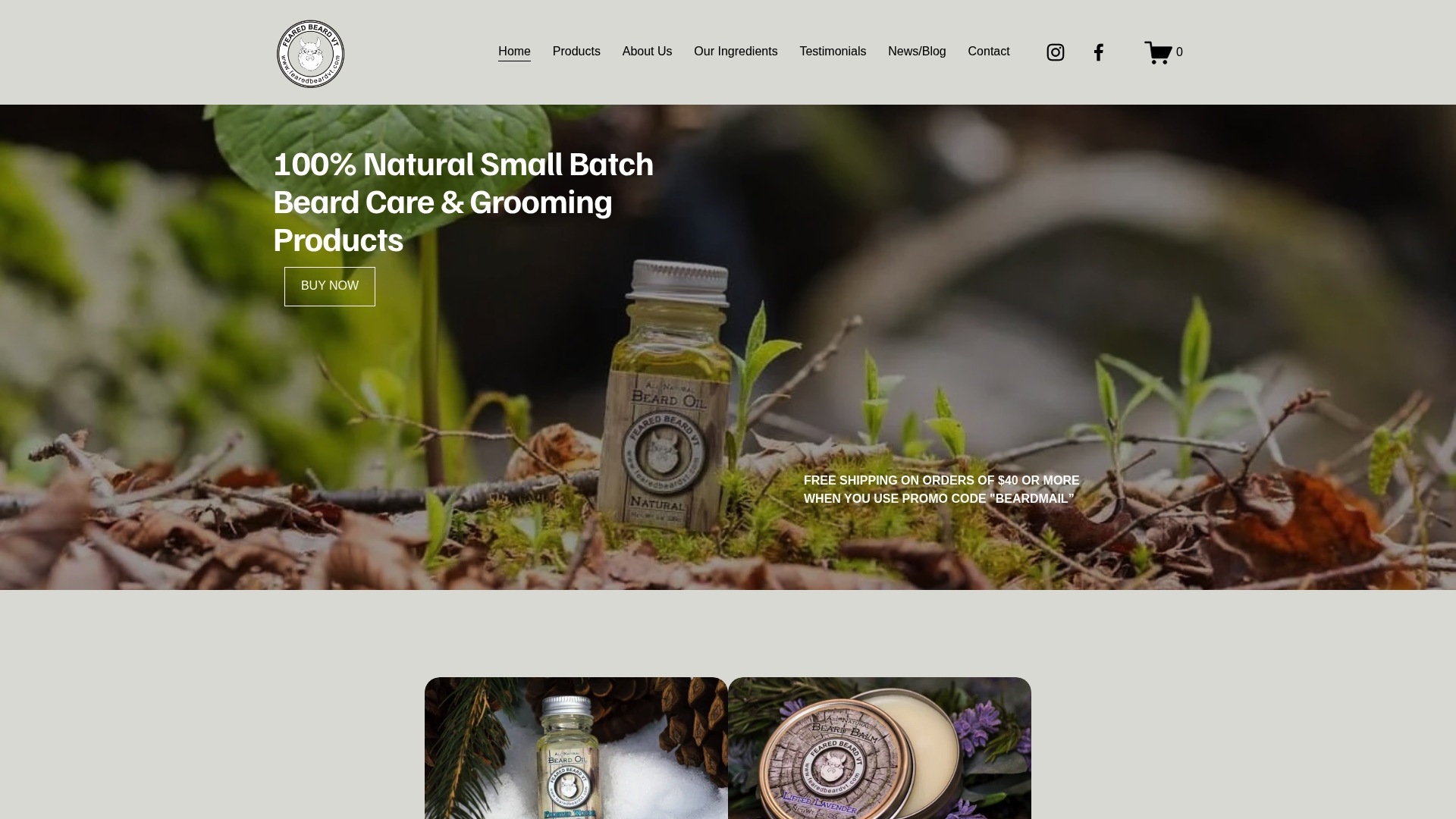
Every product is formulated and packed by hand, and our beard oil and beard balm pages list the scent options so you can choose before you order.
FAQ
Is "natural" the same as eco-friendly?
No. "Natural" is not defined by the FDA for cosmetics, so it describes no standard on its own. Eco-friendly is about the whole product: ingredients from renewable sources, packaging you can reuse or recycle, and a formula that you can read and understand on the label.
How often should I wash my beard?
Two to three times a week suits most beards, and more often if you work outdoors or sweat a lot. EWG says regular cleaning is a good first step if itch develops. Use a wash or soap made for beards, since ordinary hand soap strips natural oils.
What should I avoid on a beard product label?
Start with "parfum" or "fragrance," which can hide many ingredients behind one word. Then read the first five ingredients, since they make up most of the product. If you have sensitive skin, an unscented product is the simplest choice.
What is the easiest way to cut waste in a beard routine?
Use fewer, longer-lasting products. A bar of soap replaces a plastic bottle, a balm can do the work of a separate styling product, and a wooden brush or comb lasts for years. Use each product up before you replace it.
Sources
- EWG: It's no-shave November, not no-care November
- EWG: 'Natural' or 'Organic' Cosmetics? Don't Trust Marketing Claims
- EWG: Greenwashing: Truth versus hype about consumer products
- Mayo Clinic Health System: "Natural" personal care products
- Green Matters: Sustainable Beard Care to Take Care of Your Beloved Scruff
- FashionBeans: How To Make Your Grooming Routine Sustainable
- Allure: How to Tell a Legitimate Beauty Product Claim From a Fake
- Eco-friendly oral care: what it is and how to start